Inside Crossed Hearts: The Publisher Betting Big on India’s Yuri and Manhwa Future

On a typical weekend in India, a manga reader stands in front of a bookstore shelf, does the math in their head, and puts the book back.
₹999.
₹1,099.
Sometimes more.
For a student, that is not impulse money. It is deliberation money. It is the difference between buying one volume or waiting three months. It is the quiet tax of being a fan in a price-sensitive market.
Meanwhile, entire genres remain underrepresented. Yuri is still treated by many global publishers as a “risky niche.” Manhwa is booming digitally, but largely confined to vertical scroll screens, rarely adapted into physical editions that respect pacing, panel flow, and art integrity.
India’s anime and manga readership has grown aggressively over the last five years. But access to financial, regional, and editorial has not scaled at the same speed.
Into that gap steps the Crossed Hearts, a new English-language publisher operating between Dallas (USA) and Bangalore (India), and moving with unusual confidence for a first-year company.
Their opening play is not cautious.
Manga volumes are priced at ₹799 in India.
Full-color Manhwa volumes often exceeding 370 pages launching between ₹1000 and ₹1299, significantly below international retail standards.
No print-on-demand shortcuts. Pre-stocked inventory. Local warehousing across metropolitan hubs with a central base in Bangalore.
A stated commitment to no editorial censorship of mature Yuri content, with shrink-wrapping and age markings only where legally required.
Active retail expansion into cities beyond the usual Mumbai–Delhi–Bangalore triangle, including targeted movement into Northeast India.
And a slate that reads less like a startup experiment and more like an established house: 40 releases in its first year, with projections of nearly 100 titles in the next.
This is not a publisher testing the waters with one or two safe bets.
It is a publisher positioning itself early in pricing, in genre, and in geography for a readership it believes is already here.
When we spoke with the founder of Crossed Hearts, what emerged was not the language of niche cultivation, but of long-term ecosystem building. Not a defensive justification of Yuri as a specialty category but a refusal to frame it as one at all.
If India’s manga market has been constrained by cost, caution, and selective licensing, Crossed Hearts appears to be betting that readers are ready for something more expansive.
And they are building accordingly.
The Price War India Needed
We are not selling with our US pricing in India. Our prices are tailored to the local market.
For years, the Indian manga reader has operated in a peculiar economic middle ground.
Most English-language manga available in India follows global pricing structures. A standard U.S. volume priced at $12.99 typically translates to anywhere between ₹950 and ₹1,200 after import margins, logistics, and retailer markups. For collectors, that compounds quickly. A 10-volume series can cross ₹10,000 without effort.
In a country where discretionary spending is carefully calculated, especially among students and young professionals who form the backbone of anime readership, price becomes the silent gatekeeper.
Crossed Hearts is not pretending that reality does not exist.
Instead of direct currency conversion, the publisher has opted for regional calibration.
Standard manga volumes are launching at ₹799 for India, a noticeable drop from the ₹1,000+ norm. It is not a dramatic undercut designed to destabilize the market. It is deliberate positioning: lower enough to reduce hesitation, high enough to maintain perceived production value.
The real signal, however, appears in their Manhwa pricing.
Full-color editions in the U.S. market commonly retail between $20 and $22. Converted directly, that would push Indian pricing well beyond ₹1,700. Instead, Crossed Hearts’ early volumes are positioned between ₹1,000 and ₹1,299, despite exceeding standard page counts, often reaching 370–380 pages, roughly 100 pages more than the typical 280–300-page benchmark.
That pricing decision does two things simultaneously:
- It acknowledges India’s price sensitivity.
- It refuses to devalue premium production.
The books are not print-on-demand units produced only when ordered. According to the founder, the company maintains pre-existing inventory supported by localized warehousing across metropolitan tiers, with a central warehouse in Bangalore. Delivery timelines are intended to align with standard Amazon India expectations, rather than international shipping delays.
This is a structural commitment, not just a marketing promise.
And then there is the geographic detail that most readers might overlook but retailers will not: expansion into Northeast India. Distribution discussions in regions like Assam and Nagaland signal a strategy that extends beyond the predictable urban triangle of Mumbai, Delhi, and Bangalore.
For a first-year publisher planning 40 releases in 2026 and scaling toward nearly 100 the following year, pricing and distribution are not side notes. They are the foundation of scale.
In an ecosystem where high cost has historically narrowed readership growth, Crossed Hearts appears to be testing a different assumption:
That affordability without compromising quality is not a risk, but an accelerant.
The Yuri Gamble That Isn’t a Gamble
In global publishing conversations, Yuri is often described with a qualifier.
“Promising, but niche.”
“Growing, but limited.”
“Passionate audience, but small.”
The language itself reveals the hesitation.
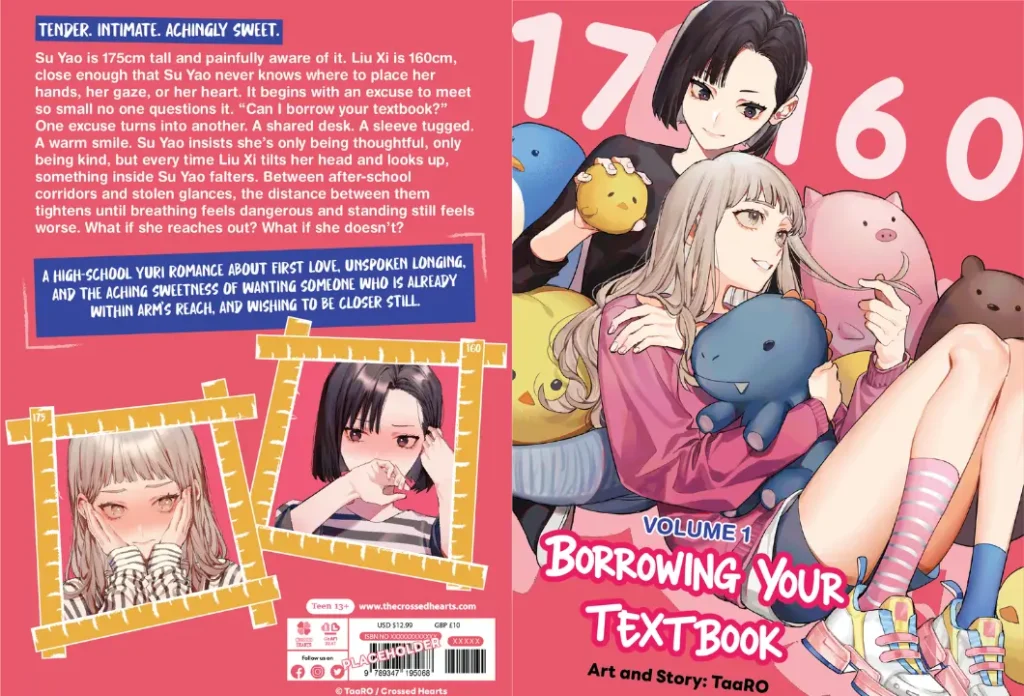
The imprint’s inaugural release, Borrowing Your Textbook, marks the formal beginning of Crossed Hearts’ 12-title Glam Beat lineup. Positioned as the first entry in the series, it signals the publisher’s commitment to establishing Girls’ Love not as a side category, but as a sustained publishing vertical.
Created by TaaRO, Borrowing Your Textbook centers on the quiet tension between two schoolgirls: Su Yao and Liu Xi, whose tentative closeness begins with a simple pretext and slowly evolves into something more emotionally charged. Set against the understated intimacy of shared desks and after-school corridors, the series leans into restrained, character-driven romance rather than spectacle.
For many English-language publishers, Girls’ Love has historically been treated as a specialty imprint carefully rationed, selectively marketed, and rarely scaled aggressively. The assumption is that while demand exists, it is contained. That it must be tested in small batches.
Crossed Hearts is operating from a different premise.
Its dedicated GL imprint, Glam Beat!, launched not as an experimental branch, but as a core pillar of the company’s identity. Twelve Yuri titles have already been announced under the imprint, with plans to scale toward 20–30 titles by 2027. The sourcing strategy is not confined to a single territory: Japanese Yuri manga, Korean GL Manhwa, Chinese Baihe novels and Manhua, and even Thai works are part of the roadmap.
This is not genre tourism. It is portfolio construction.
When asked about the perceived risk of focusing heavily on Yuri, the founder reframed the premise entirely.
“We don’t believe anything is niche.”
That statement is less rhetorical than it appears.
The logic is straightforward: every genre has a dedicated readership. Underrepresentation does not equal absence of demand. It often reflects publishing caution rather than audience scarcity.
Yuri’s growth pattern in Japan itself supports that view. While not traditionally positioned as mainstream shonen or shoujo, the category has steadily expanded, particularly through creator-driven platforms such as Pixiv, where independent mangaka build strong followings outside conventional serialization pipelines.
Crossed Hearts is actively tapping into that ecosystem.
Alongside traditionally published works, the company is pursuing creator-direct collaborations, licensing titles that may not have had large-scale print runs in their home markets but demonstrate narrative strength and reader engagement. It is a move that shifts evaluation from pure sales replication (“Will this sell in English because it sold in Japan?”) to editorial conviction (“Is this story strong enough to travel?”).
There is also a longer arc at play.
If the Indian anime and manga audience continues expanding, particularly among younger readers who are already comfortable consuming diverse digital content, then treating Yuri as a side shelf may no longer reflect actual reader behavior.
By establishing ‘Glam Beat!’ early, Crossed Hearts positions itself not merely as a participant in GL publishing, but as a primary gateway for it in English-language markets, including India.
In that light, the “risk” begins to look less like speculation and more like early infrastructure building.
The gamble is not whether Yuri has an audience.
The gamble is whether other publishers will move as decisively.
Current Romance Titles from Crossed Hearts
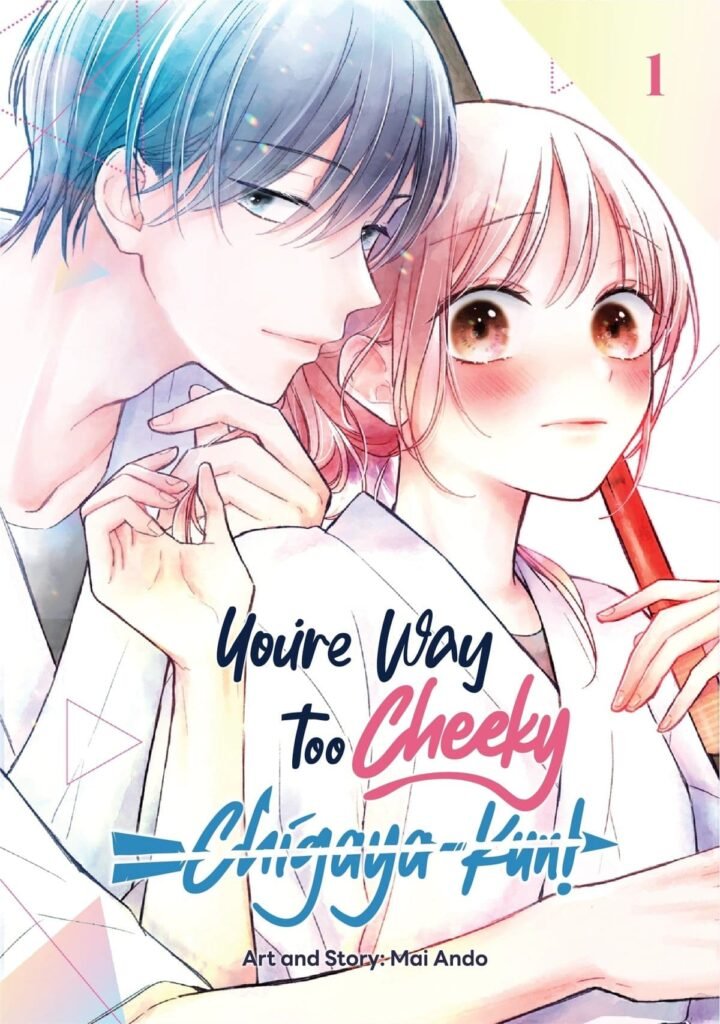
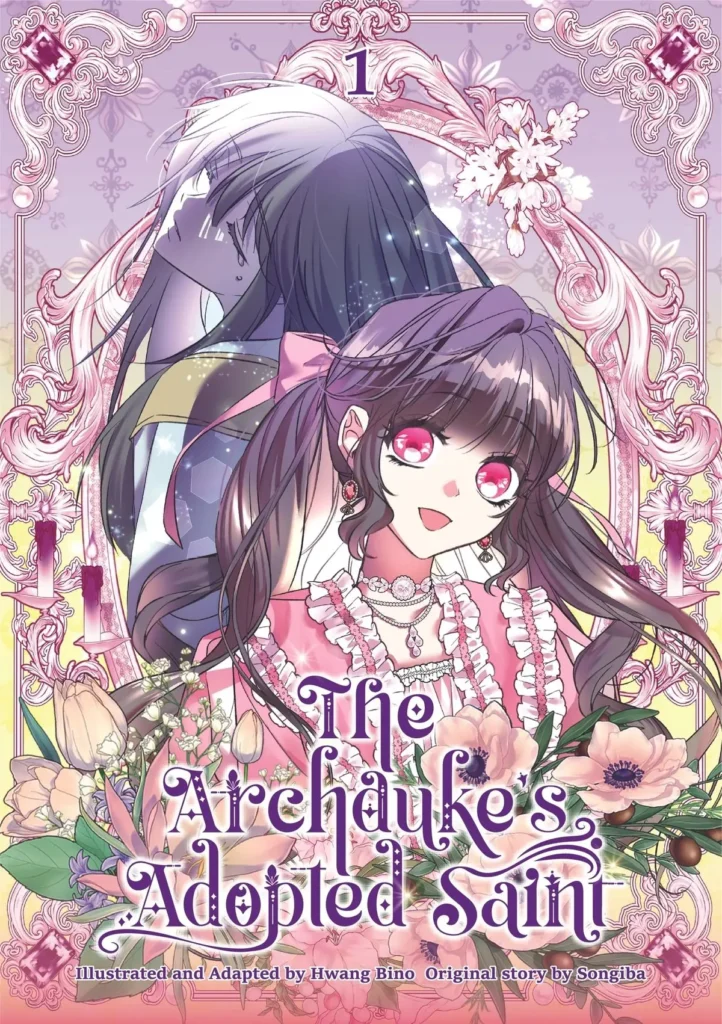
Beyond its Glam Beat! imprint, Crossed Hearts is also building a broader romance catalogue across genres and tones. The following titles represent the publisher’s current straight romance releases.
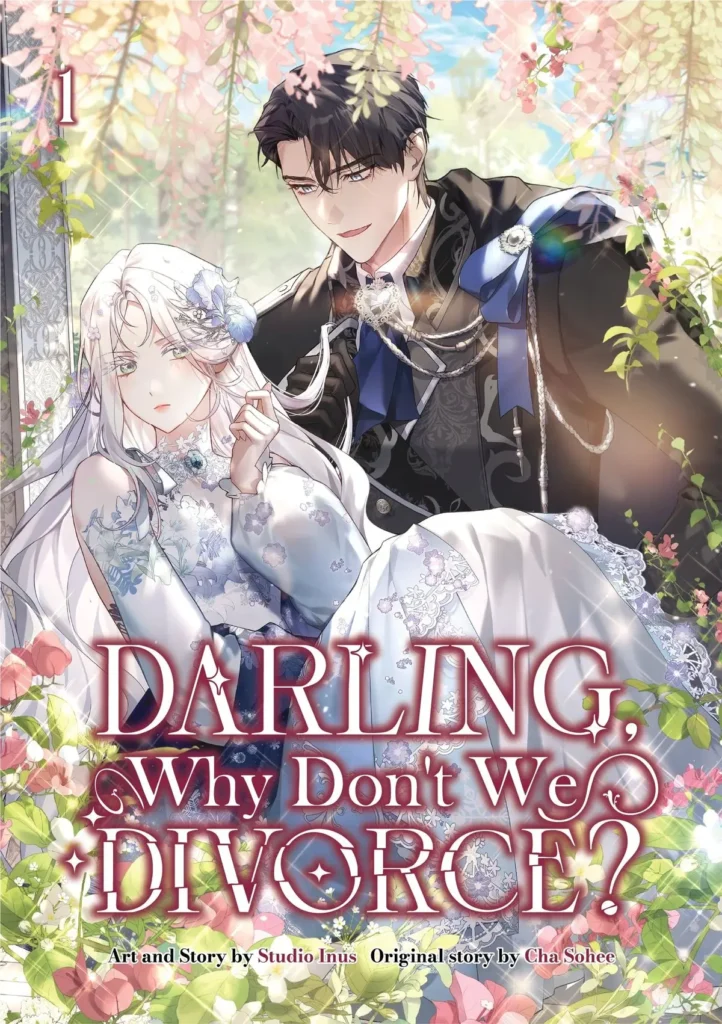
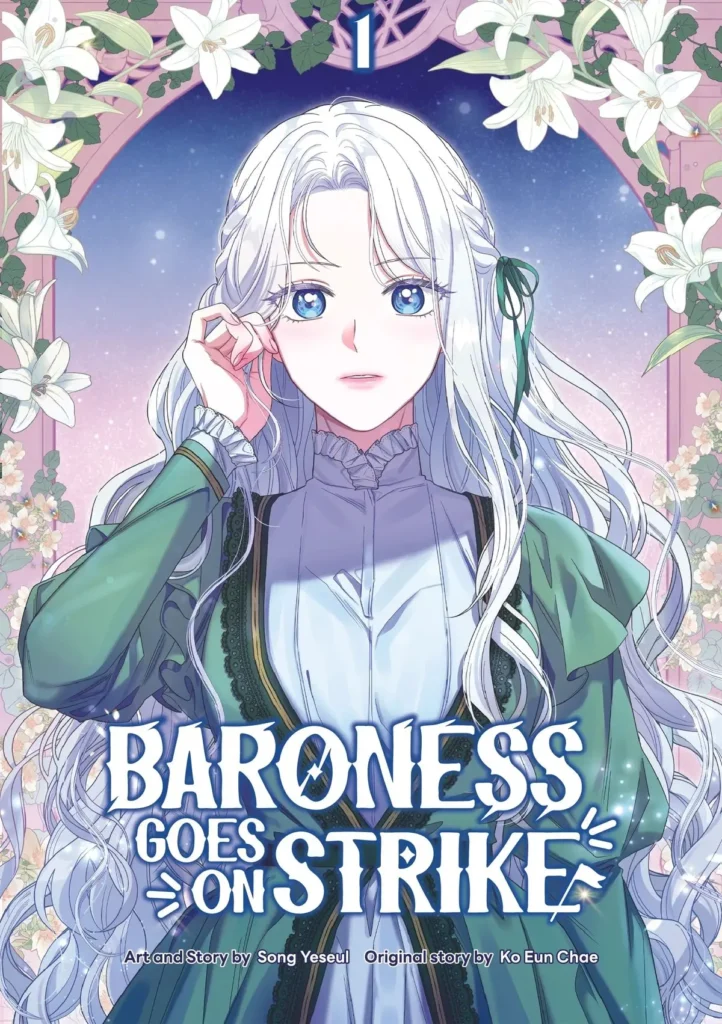
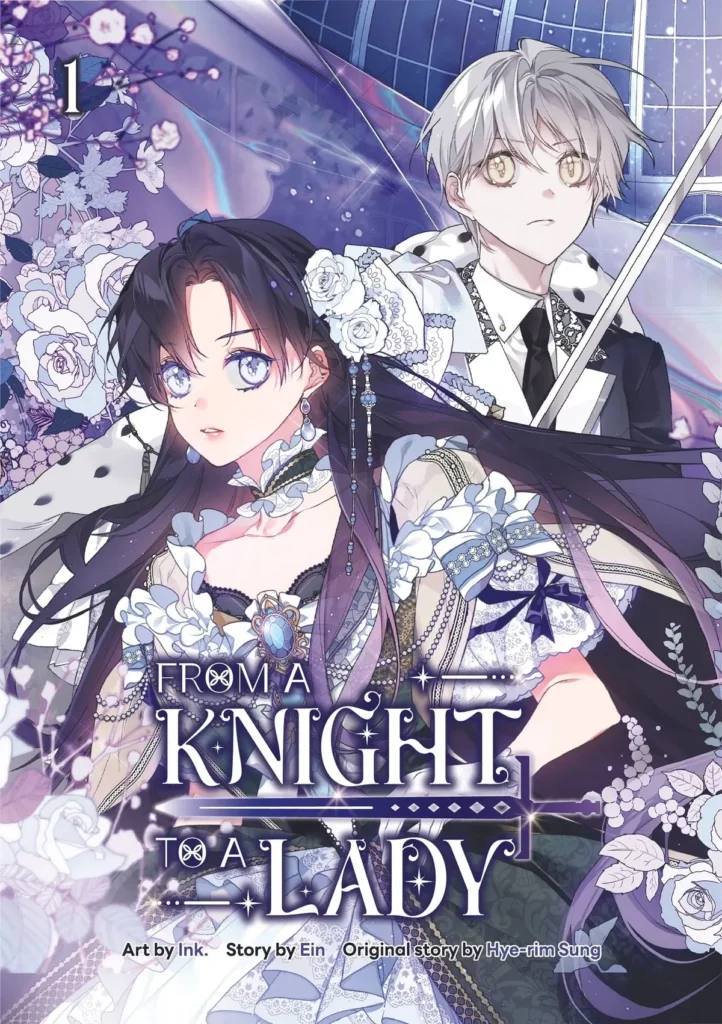
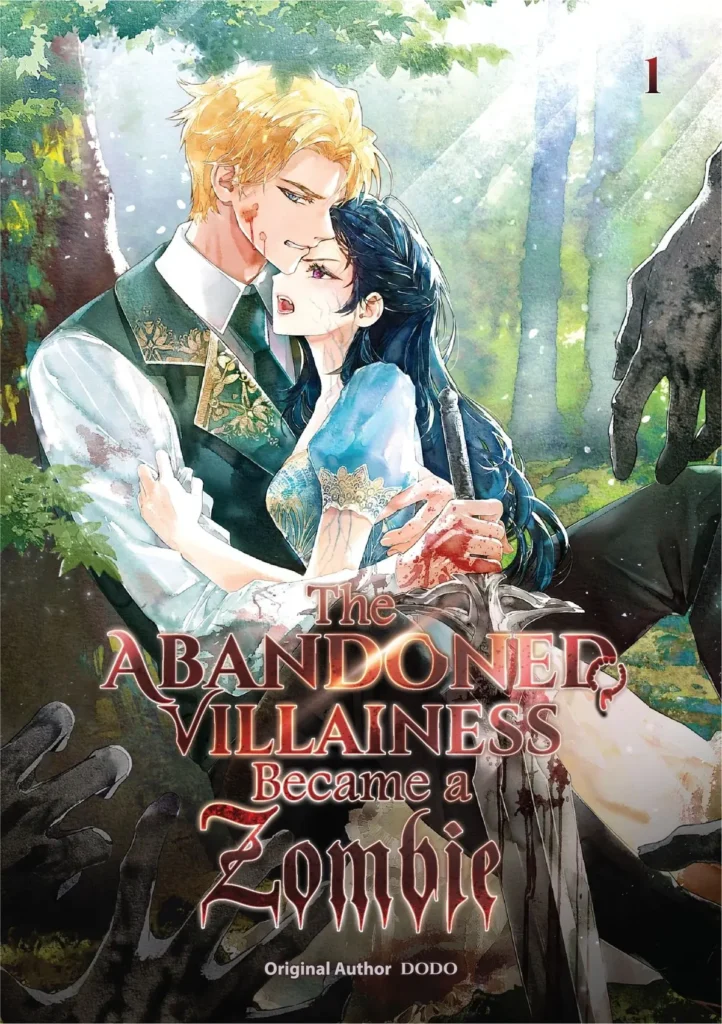
Translating the Scroll: The Manhwa Adaptation Problem
The exact panel seen digitally is conveyed in the print edition, without cutting off anything at all.
If pricing determines accessibility, format determines experience.
And few challenges in contemporary publishing are as technically delicate as this one: how do you translate a vertical, infinite-scroll Webtoon into a physical book without flattening its rhythm?
Manhwa, particularly those born on digital platforms, are engineered for phones. Panel spacing is elastic. Emotional pauses are created through white space. Climaxes are often built on long vertical descents that physically guide the reader’s thumb.
In print, that architecture collapses.
Stack too many panels per page, and pacing suffocates.
Crop for convenience, and artwork integrity suffers.
Compress spreads, and impact vanishes.
Readers who primarily consume Webtoons digitally are not wrong to worry. The fear is not aesthetic; it is structural.
Crossed Hearts acknowledges that this was an early internal challenge.
Rather than simply resizing panels to fit standard page grids, the company describes a research-heavy editorial process: reworking layouts, balancing panel density, preserving negative space, and designing page backgrounds that complement rather than compete with the art.
The emphasis, according to founder Aurora Aurealis, is not on replication but on preservation of experience.
No art cropping.
No panel truncation.
Strategic use of full spreads and double spreads.
Intentional restraint on how many panels occupy a page.
In some titles, the publisher is adding fold-out pages for heightened scenes, an analog answer to digital spectacle. Journal pages inserted between chapters allow readers to annotate their thoughts without marking over artwork, effectively personalizing copies while preserving core content.
These additions are not gimmicks. They are signals.
They suggest that Crossed Hearts does not view print as a secondary afterthought to digital success. Instead, it treats the physical edition as a distinct medium requiring its own design philosophy.
There is also the question of translation nuance.
Sound effects (SFX), tonal shifts, and dialogue pacing in Korean Webtoons often rely heavily on visual-text interplay. Simply replacing text without attention to spacing can distort the mood. The publisher claims careful treatment of SFX recreation and panel atmosphere in English is a subtle but significant detail for readers attuned to visual storytelling mechanics.
This is where the company’s ambition becomes clearer.
It is not merely licensing Manhwa.
It is attempting to solve the format translation problem in a way that reassures digital-native readers that their experience will not be diluted.
In a market where physical Manhwa still feels experimental in many territories, execution matters more than announcement.
If done correctly, the scroll does not disappear in print.
It transforms.
Localization Without Dilution
If format translation is a technical challenge, cultural translation is a philosophical one.
Every international publisher must eventually answer the same question:
How much do you adapt a story for a new audience before it stops being the same story?
For Crossed Hearts, the stated boundary appears clear localize for comprehension, not for comfort.
The company does not subscribe to heavy localization practices that flatten cultural specificity into generic English familiarity. Instead, it approaches translation with a preservation-first mindset. Idioms that have close English equivalents may be adapted for clarity. But when a cultural expression carries structural weight in character dynamics or tone, the original intent is retained, supported by footnotes rather than substitution.
A small example illustrates the larger philosophy.
In Japanese storytelling, forms of address: ‘san‘, ‘kun‘, ‘senpai’ – are not decorative. They encode hierarchy, intimacy, distance, and emotional shifts. English, by comparison, offers far fewer formal gradations. A casual first-name basis can unintentionally erase relational tension.
Rather than collapsing these nuances into neutral dialogue, Crossed Hearts preserves them when they are narratively significant. If a character’s insistence on being addressed formally is a recurring dynamic, that structure remains intact. Footnotes become explanatory bridges, not editorial erasers.
The same logic applies to culturally dense works such as Chinese Manhua or Baihe novels, where idiomatic expressions and social frameworks may not have clean Western parallels. When direct translation risks losing meaning, contextual notes are used. When English tonal adjustments are necessary to convey respect or informality, they are calibrated carefully, not rewritten wholesale.
This approach reflects an understanding that readers engaging with Japanese, Korean, or Chinese works are not looking for domesticated fiction. They are often drawn precisely to the cultural texture embedded within these narratives.
Heavy localization may widen accessibility superficially. But it can also dilute what made the story distinct.
Crossed Hearts appears to be betting that its readership prefers authenticity with guidance over simplification with erasure.
In a global publishing environment where localization debates have grown increasingly visible, that stance places the company on a preservationist side of the spectrum, one that trusts readers to meet stories halfway.
The Uncensored Question
“We wouldn’t be censoring anything.”
No discussion about Yuri publishing, particularly in India, is complete without addressing content boundaries.
Girls’ Love, depending on the title, can range from quiet slice-of-life romance to explicitly mature storytelling. For global publishers operating across multiple territories, that spectrum often triggers internal compromise: edited panels, softened dialogue, selective cropping, or region-specific modifications.
Crossed Hearts’ position, at least editorially, is direct.
They do not intend to censor original artwork or dialogue.
That does not mean ignoring regulatory realities. In markets where age classification is required, books will be marked accordingly. Mature titles may be shrink-wrapped and labeled 18+. In regions where certain content is legally impermissible for sale, distribution simply will not occur.
But the content itself where legally retailable, remains intact.
That distinction matters.
There is a difference between compliance and alteration. Between restricting access based on age and modifying a creator’s work to make it more broadly palatable.
For a Yuri-focused imprint like Glam Beat!, the commitment signals something larger than a content policy. It signals trust both in the creators and in the readers.
In many emerging markets, publishers sometimes err on the side of conservatism, anticipating backlash before it occurs. Crossed Hearts appears to be taking a more measured view: that mature storytelling, clearly labeled and responsibly distributed, does not require preemptive sanitization.
This stance aligns with their broader editorial philosophy. Cultural authenticity is preserved. Tonal nuance is respected. And mature material, when present in the source work, is not editorially diluted.
In a market still calibrating its comfort with diverse genres, that approach is quietly assertive.
Not provocative.
But principled.
Japan, China, and the Politics of Creative Freedom
International licensing is often discussed as if it were a uniform process.
It isn’t.
Behind every translated volume lies negotiation not just of rights, but of presentation, packaging, and creative latitude. And according to Crossed Hearts, those negotiations vary significantly depending on where the work originates.
While Aurora Aurealis is careful not to generalize entire countries, she acknowledges that collaboration styles differ across markets.
Chinese publishers and creators, she notes, have tended to offer greater flexibility, whether in structuring volumes, adapting scroll-format paneling for print, or developing supplementary merchandise and limited editions for English readers. Decisions such as how many chapters to include per volume, or how to design collector-focused additions, often allow room for publisher input.
That flexibility extends beyond format. There is, according to Aurelius, a visible enthusiasm among some Chinese creators for English-language expansion. Support for international editions can become collaborative rather than purely transactional, a factor that subtly influences execution quality on the publishing side.
Creator-direct deals amplify that effect. When working directly with artists rather than exclusively through large publishing houses, dialogue can become more fluid. Creative adjustments aimed at strengthening English-market appeal without altering core content are sometimes easier to navigate.
Japan, by contrast, often operates within more established structural frameworks.
Long-running manga properties typically carry strict style guides, branding expectations, and cover-design constraints. Creative modifications, even minor ones, may be limited in order to preserve the original publisher’s vision. Merchandise approvals and limited-edition expansions can be tightly regulated.
This is not resistance.
It is legacy infrastructure.
Japanese publishers have spent decades building globally recognizable properties, and consistency across territories is part of that stewardship. For a newer English-language publisher, that can mean less flexibility but also a clearer blueprint.
The contrast is not about openness versus rigidity.
It is about the maturity of the ecosystem.
China’s rapidly evolving digital-first industry may naturally allow more experimentation in international presentation. Japan’s long-established print-dominant system prioritizes brand continuity. Korea’s Webtoon-centric environment introduces yet another model shaped by platform-first storytelling.
For Crossed Hearts, navigating these differences is not incidental. It is an operational reality.
The company’s ambition spanning Japanese Yuri, Korean Manhwa, Chinese Baihe, and Thai works requires fluency not just in language, but in licensing culture.
In that sense, creative freedom is not merely an artistic question.
It is geopolitical logistics.
And how well a publisher moves through those systems may ultimately determine how expansive its catalog can become.
Building Beyond “Niche”: The Long Game
We’re not looking at a one-time success. We’re building a community that will last.
It is easy, especially in emerging markets, to frame growth in cautious increments.
One or two test releases.
Limited genre exposure.
Wait for sales data.
Adjust slowly.
Crossed Hearts is not following that model.
Launching with approximately 40 releases in its first year, while already signaling nearly 100 titles planned for the next, is not defensive publishing. It is capacity building. It suggests that the company does not view itself as experimenting within a niche, but as constructing infrastructure for scale.
That distinction matters.
When asked whether Yuri or even manga and Manhwa more broadly would remain niche categories in markets like India, Aurora Aurealis rejected the premise outright.
“We don’t believe anything is niche.”
The statement aligns with observable trends. India’s anime consumption has expanded dramatically over the last five years, driven by streaming access, social media visibility, and convention culture. Physical book sales, however, have lagged behind digital enthusiasm, often constrained by price, distribution gaps, or limited title variety.
If readership growth continues on its current trajectory, then genre segmentation may become less about risk and more about timing.
By investing early in pricing adaptation, regional warehousing, GL-focused imprints, and multi-territory licensing, Crossed Hearts is positioning itself for a market it believes will look very different in five years.
This is not short-term arbitrage.
It is ecosystem thinking.
Scaling from 40 to 100 titles within two years requires more than optimism. It requires supply chain coordination, translation pipelines, retailer confidence, and sustained reader engagement. It also requires trust that readers will support the risk taken on their behalf.
Perhaps most notably, the company’s approach does not revolve around a single breakout hit. There is no reliance on one flagship property to carry visibility. Instead, the strategy resembles portfolio diversification: Japanese Yuri, Korean Manhwa, Chinese Baihe, Thai titles, traditional serialization alongside creator-direct projects.
If even a fraction of those resonate deeply with English readers, the imprint becomes not just a distributor, but a gateway.
And that may be the more significant shift.
For years, English-language readers seeking diverse Girls’ Love or print Manhwa options have navigated fragmented availability. If Crossed Hearts sustains its current pace, it could centralize that search, particularly in price-sensitive markets like India.
The long game, then, is not about proving that Yuri or Manhwa are mainstream.
It is about removing the barriers that kept them from becoming so.
The Full Conversation with the Founder
The strategic decisions outlined above did not emerge in isolation. They were articulated, point by point, in a wide-ranging conversation that moved from pricing mechanics and warehouse logistics to Yuri market perception, Webtoon panel reconstruction, localization philosophy, and the realities of cross-border licensing.
What follows is our full conversation with the founder of Crossed Hearts, presented in full for readers who want to examine the details directly.
Bhaskar: Thank you so much for joining and for your patience with our technical glitch. We are totally sorry for like, what happened with our delay and everything and but I am Bhaskar from Indian Anime Network, and just for the recording and article, the header and could you please state your full name and official title, so we get the spelling 100% correct and like, what is Crossed Hearts and what it represent in the whole Indian anime community and the worldwide anime community. Just give us a brief overview.
Aurora: Okay, so I am the founder of Crossed Hearts, and I go by the pen name Aurora Aurealis, and generally, I handle everything in terms of the licensing direction, the editorial direction, and the business front for Crossed Hearts collectively.
In terms of Crossed Hearts, we are dually based out of Dallas, USA, where we have a headquarters alongside our office in Bangalore, India. So we operate in both of these territories.
Talking about Crossed Hearts itself, I would say it’s a relatively new venture which was there in plans for a very long time, wherein our backend process started in the year of 2024, and our first release of our book was on January this year.
So we have close to 40 books in the lineup for print release this year, and overall, we’re very excited to bring all of these to the market. At the same time, although our primary markets are, let’s say, the US, Canada, we also have distribution across the globe, including the UK, Europe, India, Australia, New Zealand, and parts of Southeast Asia and the Middle East.
So collectively, all of our titles are available worldwide for every single release. To give you a better clarity, specifically for the Indian market and the community, if they want to purchase any of our titles, they’ll be able to find it across all of the local bookstores, including Crossword, Sapna Book House, and also Higginbothams, which are the chain stores.
Similarly, we also have like localized retailing for sub retailers in major metropolitan cities, especially in Bangalore, Delhi, Mumbai, Hyderabad, Chennai, Kolkata. It is possible to find books in even the local bookstores. So beyond this, we are also steadily expanding into North East India, wherein for Northeast including Nagaland, Assam and parts of that zone is where we will be looking into having more books directly retailed, and definitely, for those who don’t have a bookstore nearby, they can always find the titles on Amazon India, where they will always be up for sale.
Bhaskar: Okay, like you previously said, the Crossed Hearts books are available via Amazon India and other places. So, does this mean, like, Indian fans can expect domestic pricing and shipping speeds? Is it a print-on-demand model, or suppose let’s say, if someone orders, as you have mentioned, like you are branching out into Assam and Nagaland and other areas, like the East areas. So in that area, suppose someone orders from Assam via Amazon India, and other places. So can they expect like ‘under 10 days delivery’, or ’14 days delivery’, or it will take a longer process, or anything at all?
Aurora: It’s not going to take long at all because we have warehousing in localized city-wise tiers. All of the metropolitan areas have sub-warehouses. And at the same time, our central warehouse is in Bangalore. So generally, delivery should be as per Amazon’s regular timelines. It’s not on a print-on-demand model. We have pre-existing inventory, which is going to be in stock, so that will be supplied whenever readers buy it. So that wouldn’t be an issue. At the same time, there’s one good point that you raised, which was in regards to domestic pointing pricing. So, in regard to that, yes, we are not selling with our US or international pricing in India; we do understand the price differences in the market. So accordingly, all of our prices for India are tailored to the local market.
Bhaskar: Okay. And apart from the price and everything, I am very much interested in your Glam Beat! imprint. Like yesterday, and the day before yesterday, we were in Anime India Kolkata, covering the whole event and everything. And there were sections like the Yuri section and the Yaoi section and everything. So most global publishers treat Yuri as a risky niche, right?! What data and trends did you use to see that made you confident to launch a dedicated imprint for Yuri? Like, do you see the marketing shifting from fan service to more serious, literal romance? Or like, what made you decide to launch the Glam Beat!, like the most interesting theme of Crossed Hearts.
Aurora: So, primarily in regards to Glam Beat, our vision was in regards to long-term readership. Primarily because, again, Crossed Hearts is founded by a group of passionate readers, wherein I’m a reader myself.
I’ve been reading manga for the last 12 years, and considering that, I do have a lot of exposure in terms of different genres, different categories of books, and I primarily enjoy reading Yuri myself.
So, considering this, when it comes to the books, I mean the imprints, curation of titles, and so forth, I’ve been directly involved in terms of shortlisting the titles which I think are good for the market, good for the readers, and so forth. Primarily, more than anything else, when we tend to select titles, we tend to evaluate them based on the editorial standpoint. If our team finds that the book is interesting to read, and if that is something that we believe other fellow readers will also enjoy reading, that serves as a ground for licensing for us. More than anything, we do not think it is right to just assume that whatever are these sales that are happening in Japan would be the exact sales that the story can expect, even internationally.
So more than anything, we tend to believe strongly on the strength of the storyline itself, which we do it based on the recommendations that we receive from the readers, and also based on what our in-house editorial team finds in terms of the strength of the storyline.
And when you said that, since not many people do it, what made us launch the Yuri imprint specifically for this? To answer that, I would say that again, it’s exactly because not many people do Yuri titles that we wanted to do it primarily because there needs to be at least someone who brings it to the market. And we believe that we can be that front wherein, starting with the 12 titles that we currently announced for Glam Beat, we will be scaling the imprint up much higher, with close to 20 to 30 titles planned in 2027. It’s going to be a mix of different GL titles, which includes both Yuri manga and also lots of creative focus Yuri that are being developed in Japan.
So primarily, even within Japan, Yuri is a category of books that is steadily growing; it’s not too mainstream. That is one of the reasons why the majority of the Yuri mangakas in Japan tend to have their work uploaded on Pixiv and other reader-focused communities, as opposed to traditional serialization.
So at Crossed Hearts, we’re not just looking at taking up traditional serialized comics, which are already doing well in the market. Like I said, we’re also going to be doing a mix of creator-centric titles, which the creators have not traditionally published, but then do have a strong storyline.
So, considering that, we have direct deals or collaborations with creators for a few of our titles. Few of them are with publishers for Yuri manga. At the same time, we also have a lot of discussions happening with different Korean publishers for Manhwa in Yuri as well, which we will be licensing.
We also have different Baihe- both Novels and Manhwa, which are currently being taken. So as a whole, when you look at a spectrum, we’re looking at Japanese, Korean, Chinese, and, in fact, even Thai books to be a part of our GL imprint. So across these, it is both the traditionally serialized ones, the ones which were there digitally as well in terms of serialization, and also create a focus book, so all of them together form Glam Beat!
Bhaskar: Now that you’ve said that, like the other day, someone from the Discord community, I think her name was Pranitha, so she mentioned to us that, like, we should ask this question to you- like the fans of Manhwa specifically, not the manga people. We read Manhwa specifically on the mobile, in contrast to Manga, for which we generally tend to buy, like, physical books and everything. So some of our Manhwa readers, who are reading via Webtoons and other platforms. So they are saying, like, their biggest fear with buying a physical Manhwa or Webcomic is the art flow! Like, since the stories are designed for vertical scrolling on the phone, like, how does your design team adapt the flow into a physical page without ruining the spacing? Like, is that a major challenge for you? Or like, is that something like, just us fans worry about?
Aurora: I would say, that is indeed a genuine concern, but then that is not something to worry about, primarily because it was a challenge for Crossed Hearts team, initially, in regards to how do we portray the same style or the same quality of reading experience when reading it in scroll format, in the book print format, when doing that, we have researched in regards to different forms of paneling layouting, and so many things. And now I’m proud to say that our team is very experienced in this regard. We have been doing it in a way that the exact panel, whatever is seen digitally, is conveyed even in the print edition, without cutting off anything at all, which means that the reading experience will not falter.
That is the main thing. At the same time, we ensure that there are not too many panels covered per page, which means there are pages with full spreads, some have double spreads, and we also have very focused panels, so that the art always takes the center limelight to accentuate the reading experience.
It’s not just that we have a white page where we are throwing in the panels. We have a dedicated background done for every page, which highlights the theme of all the panels that go on the page as well. So we have taken a lot of editorial care in this aspect, wherein all of the paneling, when done, we have done page backgrounds, we have ensured that no art is cut out, and that there are dedicated spreads. We’ve also made it a point that all SFX and every single thing are captured in the same quality in English as well. All of this has been done keeping the readers in mind.
Additionally, to accentuate the reading experience, we’ve given add-on features within the book, which would include a few extendable fold-out pages to give an additional impact for a few scenes from within the storyline. We also have journal pages within the book. So these journal pages are essentially there after every other chapter, so that readers can write in their thoughts for that specific chapter, so that no two books are the same. Every reader can personalize their copy with their thoughts without damaging it or without having to write over something because there is a page dedicated to the notes.
Bhaskar: So basically, you are using footnotes for every Manhwa and every chapter. So this brings me to another question, which I’m very interested in, like you just mentioned a few minutes ago, that you are even considering publication for Thai content, even other Asian content, like specifically Chinese and Korean. So there is one thing I like personally, I want to know. With Chinese Manhua specifically, the cultural content is often very dense compared to the Japanese manga. Like it’s almost the same, but there are many differences across the culture. So as you said, like you are using footnotes and everything. So are you, I mean, do you localize it heavily for English readers, like someone from India or someone from the USA, when reading your books digitally or physically? So, do you like to heavily localize it, or do you just keep the original vibe and everything, and just explain it with footnotes for the better context?
Aurora: So to give you an example, we don’t believe in heavy localization. We believe that readers want to read that series because they are interested to learn more about a specific culture
So, considering that all the translations are very authentic to the source. But then at the same time, let’s say there are quite a few idioms which might be very well understood in the local language, but then might not land for English readers.
In such cases, we might localize it to the nearest English equivalent, if such an equivalent exists. If it’s not there, then we will still choose to have the original medium put into English and have footnotes to explain what exactly it means. Then, at the same time, we don’t want to ruin the story in terms of the flow, like, let’s say, when two characters are interacting with each other, especially in East Asian literature, there are a few terms that they use to refer to their seniors. Say, especially in Japanese, when it’s a senior, they tend to call them as ‘Senpai’, which means senior.
So in the release for You’re Way Too Cheeky, Chigaya-Kun, we have used Chigaya Kun, which is like, again, a way of speaking in Japanese. So inside the series, because that talks a lot about the inter-character dynamic between the characters.
So we have given footnotes and explanation to readers who might not already be familiar with this way of speaking, but then at the same time, we wanted to retain the authenticity, so that the way the characters address each other where say it’s a very important point, because the male lead in this series is a junior, and the female lead is a senior, so running gag in the series is where she wants him to respect her as she’s the older one. So, considering that we cannot have them on a first-name basis, talking very casually like we would in English.
So we have ensured to keep that original authenticity of language and text. So that the readers, when they say that you’re being too casual, speak to me more formally. And all of that. In Japanese, there’s both a formal way of speaking, an informal way of speaking, multiple different ways of speaking for the same sentence, but then to convey the same thing in English, the tonalities, the way of speaking, all of them have been adjusted so that when such sentences are said like you speak respectfully to her but then you don’t speak with me, readers shouldn’t feel that he’s speaking the same to both of you. So what’s the difference? So we’ve ensured that that’s conveyed by localizing it to that extent.
Bhaskar: And by localization, this brings to me, like another point, regarding Yuri- it is not like the mainstream market, it’s a niche market, even in the anime fandom, especially in the Indian anime fandom. So this is, again, one of the things I am very curious about, regarding the mature content in Yuri! It’s not always a generalized slice of life manga category; it has a bit of mature content sometimes. So you mentioned previously to us that these stories are bold, and Yuri generally tends to be both more normal than slice of life anime or slice of life manhwa or other things.
So, are you committed to keeping the artwork and dialog completely uncensored and authentic to the original Japanese, Korean release, or do you have to modify the things for global retail guidelines?
Aurora: We wouldn’t be censoring anything. It would be just as it is in the original content. We’ll just be localizing it to the extent necessary. Like I just said, when we’re keeping it authentic. But then maybe for a few idioms, or maybe for a few cultural ways of speaking, like since we do not have a formal English, and formal English as such, the tone of speaking to each person and so forth, that is the only extent of localization that we will be doing for all of our works.
In regard to mature content, it will still continue to be uncensored for areas where such content would not be permissible for sale; we wouldn’t be retailing them at this point, especially considering India. Let’s say we are planning to keep it again localized to the minimum extent, just like any other titles, then we would be having it shrink-wrapped and also marked 18 plus if it has anything that is too mature. But then, aside from that, the majority of our titles, if they do not have such a requirement for censorship, or there is no spicy content inside, then we will ensure to mark them according to the local requirements for censorship and provide them to the readers.
Bhaskar: This brings to me another question. Yesterday, as we were in Anime India, we asked a few die-hard fans of the genre, like the cosplayer, who were doing Mahua, Manhwa cosplay, or gaming cosplay or manga cosplay, we asked them about this. Suppose when they are buying a manga or Manhwa here, India is a very price-sensitive market, since price is a major factor here -a standard US manga costs around 800 to 1000 rupees, sometimes even more. So are you looking at regional pricing strategies for India, or will the pricing remain consistent with the global standard?
Aurora: So our pricing is tailored for the Indian market, like I answered one of the earlier questions, wherein, first and foremost, let’s say the standard USA pricing for manga is around 12.99 USD, which would be equivalent to around 1150 rupees in India. Then at the same time, we’re going to be giving the pricing to very regional, targeted pricing of around 799 rupees. So we’ll be lowering it for the market, because we do understand the price sensitivity, and we want to make it more approachable and also accessible to readers in India. That is the primary thing. This difference you would starkly notice when it comes to our Manhwa, which are all in color. So within the US, we are selling the manga for $20 to $22, which is again the market standard.
And since our books have a higher page count than the standard of around, say, 280 to 300 pages. And ours has around 370 to 380 pages. So it’s 100 pages more than the norm, alongside French flaps, which are, again, not too common within the US as well when it comes to Manhwa. So considering all of these additions, it is retailed at 20, 22 USD, which is still, I would say, a very good price for the international market. Then, considering the price sensitivity in India, volume ones are being sold currently at 1000 rupees, which is much lower than the international standard, and the upcoming volumes are going to be sold at 1,299 rupees, which is, again, I would say, half of what we are actually selling in the international market. We want to keep it as accessible as possible to the local market. And at the same time, we don’t want to undersell our books as well, because we believe in their quality.
Bhaskar: Yeah, I totally get it, and I am also curious about, like, working with the Korean studios or Chinese studios. You even mentioned Thai studios and other East Asian country studiosalong with Chinese & Japanese studios. Like, how collaborative is the process? Like, during this whole time, what’s the difference you see? Like, are they all the same? Or do Japanese studios have different collaboration approaches, rather than the Korean or the Chinese market, or even the Thai studio you mentioned?
Aurora: That’s an interesting question, and certainly it’s not the same. Depending on who we are talking to, the process differs vastly. And I cannot generalize that everyone in a specific country is the same. So it depends from publisher to publisher, and author to author, our process of working with them differs, and we try to make the process as collaborative as possible, so that when we are discussing with each person, we’re able to take the original creator’s intent in mind when we do the localization, which is the primary thing.
Then, at the same time, if you want me to point out a few common characteristics, what I can say is that when it comes to Chinese books, we have more flexibility in regards to the versions that we want to create. It could be in regards to how many chapters to include per volume. Or it could be, how exactly do we want to panel the scroll format into a physical edition? It could also be in regard to the merchandise and other collectibles that we will be making, paired with the book. All of these are very flexible.
When it comes to the Chinese market, the creators are very supportive of the English release, and they want the book to succeed. That serves as the central point in terms of encouraging us to take the book forward as well. So for sure, from our team side, from the Crossed Hearts side, we tend to ensure that we give equal effort and equal passion to every single title we license.
But then it is, it would not be true to say that it doesn’t also motivate us further when the original creator is also passionate about the English release. So that is a key factor. Wherein the Chinese authors generally motivate us with their enthusiasm and flexibility.
And at the same time, working directly with creators for any like creator direct deals that I was talking about is also motivating because they are also very flexible and want the work to succeed.
One area where we felt was a bit rigid is when it is already all preset and we are not given any creative freedom, in regards to say, coming out with our own cover page, if we want to have, like, some additional elements added to it to deliver it better to the English market, or if we want to make it a bit better for editorial sense that creative freedom being limited on our end might feel a bit limiting at times, which we have felt when working with Japanese publishers, but then that is not too much of a concern for us, because we do understand where they’re coming from. We completely respect having to adhere to the rules or style guidelines that they have for the series, because they have a vision for the book, and we want to have that vision be expressed in English.
But then that flexibility, if you’re just talking about that, in regard to the, say, the merchandise that we can make for a series, the limited edition items that we can include, let’s stay in the West. Many of our readers love the limited editions that we are bringing out for the books. That was something that we prioritized. Because, as I said, as a reader myself, I personally prefer having these collectibles for the characters I love in different books. So considering this, it was important for me to make it accessible to readers across who prefer to collect these items as well, but then that flexibility to have these made is limiting in Japan. So that is the only thing where I feel maybe if we were given more flexibility, we could have done much better in terms of execution, but we will try our best to find some understanding which would help us bring what the readers in the west, or say the English readers, enjoy. I’m also ensuring to follow through with the creator’s requirements and vision as well.
Bhaskar: I know, like, we started a bit late. I want to be respectful of your time. But before we end our interview, I want to ask, which is not really a question, rather this is something I want to know from your POV. Like looking at your 2026 slate, you are doing now: Manhwa, Yuri, Novel, so if we look back five years from now on, like, do you want Crossed Hearts to be known as niche destination, or do you think these generals are going to be new, become the new mainstream, like India is now currently the second biggest anime community after Japan, so I am thinking about that like, what’s your take on this?
Aurora: So we don’t believe anything is niche, primarily because we know that for every single genre, there is a dedicated community who are looking at getting their hands on those specific titles. So that is one main thing. If we were to consider the anime and manga industry as a whole to be more niche, supposed to be the English novels and the wider community of comics, then I do understand that. But then the market as a whole, I believe, is steadily scaling year on year. And we believe that the readers in the community who are passionate about the books continue to advocate for the series they like amongst their individual communities and circles as well.
So within the next five years, we are talking about the wider market. We do believe that the community is going to scale a lot. At the same time, referring just to Crossed Hearts, we say we are still a new and upcoming publisher, and we do believe in the long picture, as we are starting off strong with 40 releases in one year, and many new publishers might come with one or two releases to be on the safer side, but then we’ve decided to invest and into the trust that we have in the readers and also in the larger community as a whole.
So starting with 40 this year, close to 100 releases next year, across a wide slate of licenses, close to 70 that we currently have ongoing, which will be continuing to be announced in a bi-weekly announcement, where at least 12 of them are Yuri, and 12 are Yaoi, which are already discussed. But then we are continuing to get more recommendations from readers, and we’re going to keep scaling the number of titles that we license.
So that, I would say, slowly but surely, we have our goal in mind, where we want to scale in next five years, and we are confident that with the sport that we’re seeing on in the early stages, considering it’s only been the month since the launch of our first book, that we will be able to scale very quick and very I would say, in a way, we’re not looking at something where it’s a one time success, right?
We’re looking at building a community of readers that is going to last for a long time. So we are confident that in the next five years, that community is something that we will build, and the readers who are passionate about releases, we won’t disappoint, and the readers can continue to trust us to bring a wide array of titles that they wish to read in English.
Bhaskar: I mean, this is a fantastic note to end on. Thank you so much for the insight, especially the confirmation about all India release, like you are going to even not just Mumbai, Kolkata, or Hyderabad. You even mentioned about, like, going to Assam and other North East Indian places, which a normal new publisher won’t even try to go there, also if an upcoming publisher is going to try out, like they are going to try out one or two new titles. And you guys already have, like, this many new titles. And you are even going to the places that most people, most publishers, will most likely avoid, but you are taking that stance. So that is, like a fantastic thing. So this is going to be the headline for our readers. So thank you for your time, and all the best for your ventures and everything.
Aurora: Thank you so much for having us today.