Underground & Criminal Manga: 17 Completed Masterpieces Exploring the Dark Side of Society

Underground and underworld manga exist in a space where society stops pretending.
These are not stories built on idealism or resolution. They operate in the margins, among organized crime, fractured systems, and individuals forced to survive within them. Here, morality is unstable, power is uneven, and consequences are rarely clean.
What defines this genre is not just violence or illegality, but perspective. These works shift the focus away from heroes and toward participants: loan sharks, assassins, politicians, traffickers, and those caught in between. They reveal systems that function beneath the surface, often invisible, yet deeply embedded in reality.
From the streets of Kabukicho to global arms networks, from personal revenge to institutional corruption, underground manga captures the architecture of a world that runs parallel to our own.
This article focuses exclusively on completed series, stories that have fully realized their vision. Whether through psychological depth, systemic critique, or raw human drama, each of these works offers a distinct lens into the darker side of society.
If you’re looking for narratives that go beyond comfort, this is where to begin.
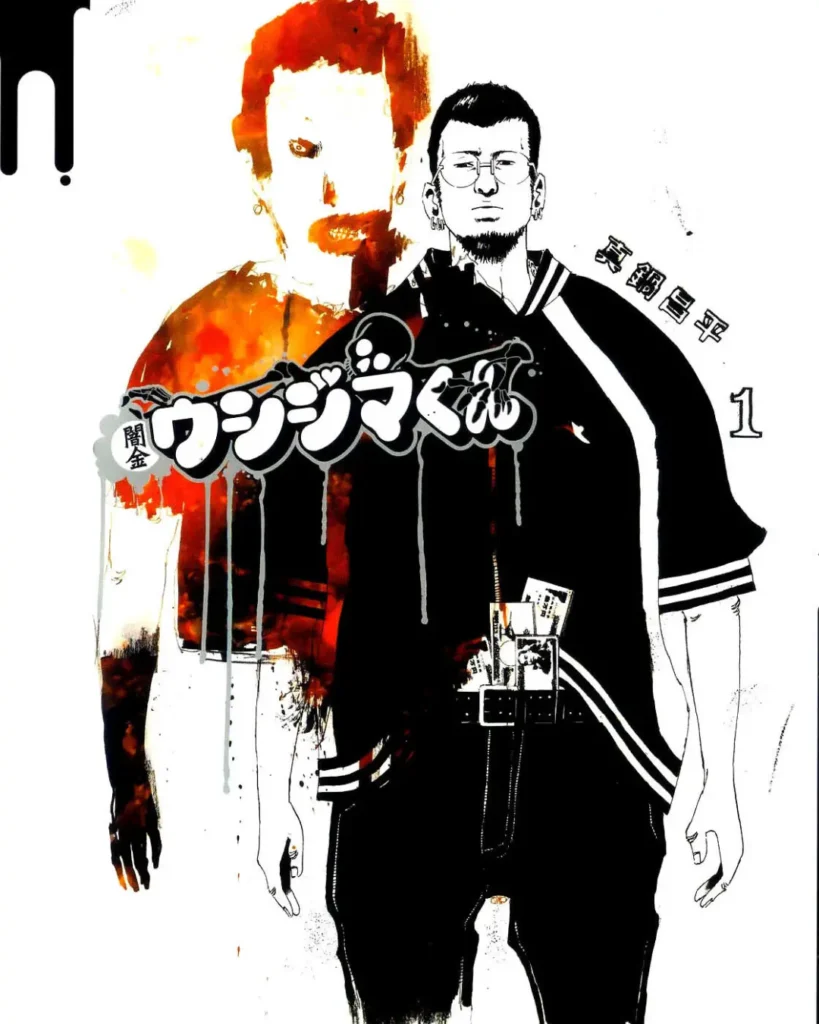
1. Ushijima the Loan Shark
Among manga that explore the economics of desperation, Ushijima the Loan Shark stands as one of the most unflinching.
Written by Shohei Manabe and serialized in Big Comic Spirits, the series ran for 46 volumes, earning the 56th Shogakukan Manga Award and later receiving a live-action adaptation starring Takayuki Yamada. But its legacy doesn’t come from accolades; it comes from how precisely it dissects the relationship between money and ruin.
At the center is Kaoru Ushijima, a loan shark operating Cow Cow Finance, an institution that thrives not on repayment, but on inevitability. His clients arrive as early as morning: housewives addicted to pachinko, individuals already collapsing under financial strain, people who are no longer choosing, but reacting.
The terms are simple.
Brutal.
Designed to fail.
A 50% interest rate. Ten days to repay.
What follows isn’t just debt—it’s erosion.
The series moves through cycles of vice and survival: gambling, prostitution, fraud, and identity theft. Not as sensational plot points, but as natural extensions of desperation. Ushijima himself is not framed as a villain in the traditional sense. He operates on a belief system where society is divided into two kinds of people: those who exploit, and those who are exploited.
And he has already chosen his side.
There is no redemption arc here. No moral correction. Only a quiet, systematic unraveling of lives that were already on the edge.
Ushijima the Loan Shark doesn’t warn you about the dangers of debt.
It shows you what happens after the warning is ignored.
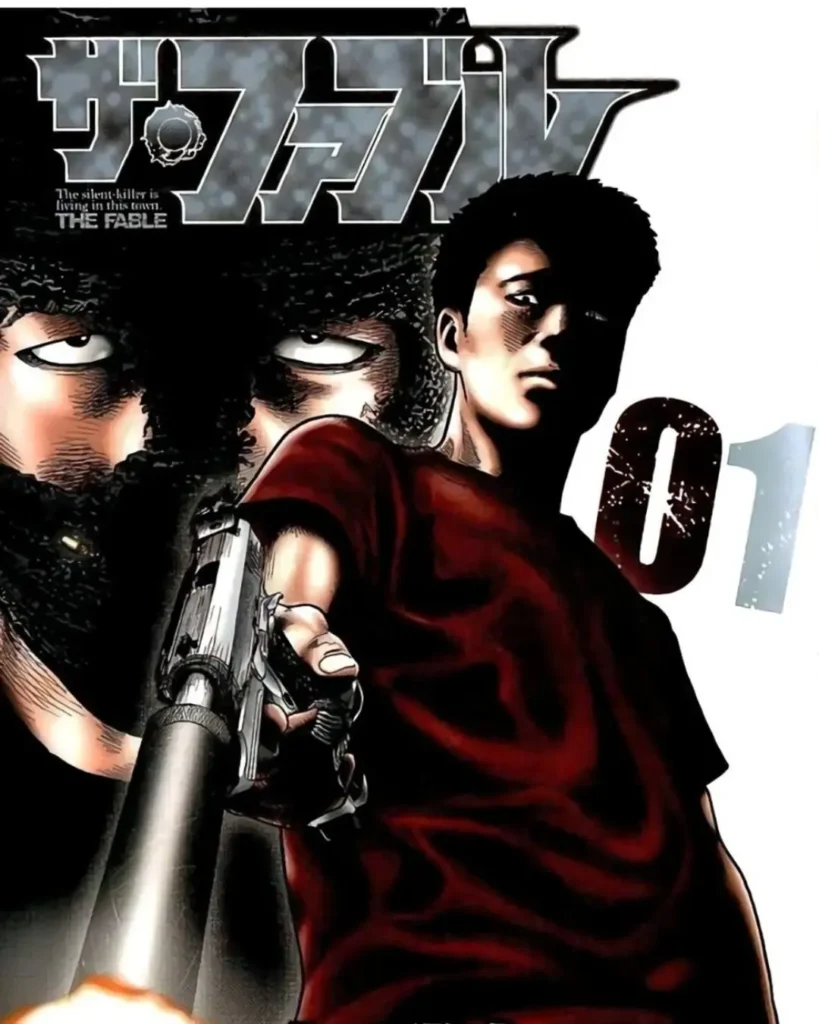
2. The Fable
If Ushijima the Loan Shark is about inevitability, The Fable is about restraint.
Written by Katsuhisa Minami and serialized in Weekly Young Magazine, the 22-volume series earned the 41st Kodansha Manga Award and expanded into both anime and live-action adaptations. But what defines The Fable isn’t its accolades, it’s its central contradiction.
A perfect hitman… who is ordered not to kill.
Known only as “Fable,” Akira Satou is a legendary assassin capable of executing any job with mechanical precision. But after one too many bodies, his boss imposes an unusual command: disappear into ordinary life for a year, and survive without taking a single life.
Failure is not negotiable.
Accompanied by his partner Youko, posing as his sister, Akira is forced into a world he doesn’t understand, normalcy. Supermarkets, part-time jobs, casual conversations. Spaces where violence isn’t currency.
And yet, the underworld doesn’t disappear.
It leaks in, through coincidence, through people, through situations that demand action.
What makes The Fable exceptional is its balance. It moves effortlessly between deadpan comedy and sudden, precise bursts of tension. Akira’s social awkwardness is often humorous, but beneath it lies something sharper: a man who has only ever existed as a weapon, now trying to function without being used.
The question isn’t whether he can kill.
It’s whether he can choose not to.
In a genre defined by excess, violence, power, and control, The Fable stands out by doing something rarer:
It withholds.
3. Banana Fish
Some underworld stories are about power.
Banana Fish is about what power does to a person.
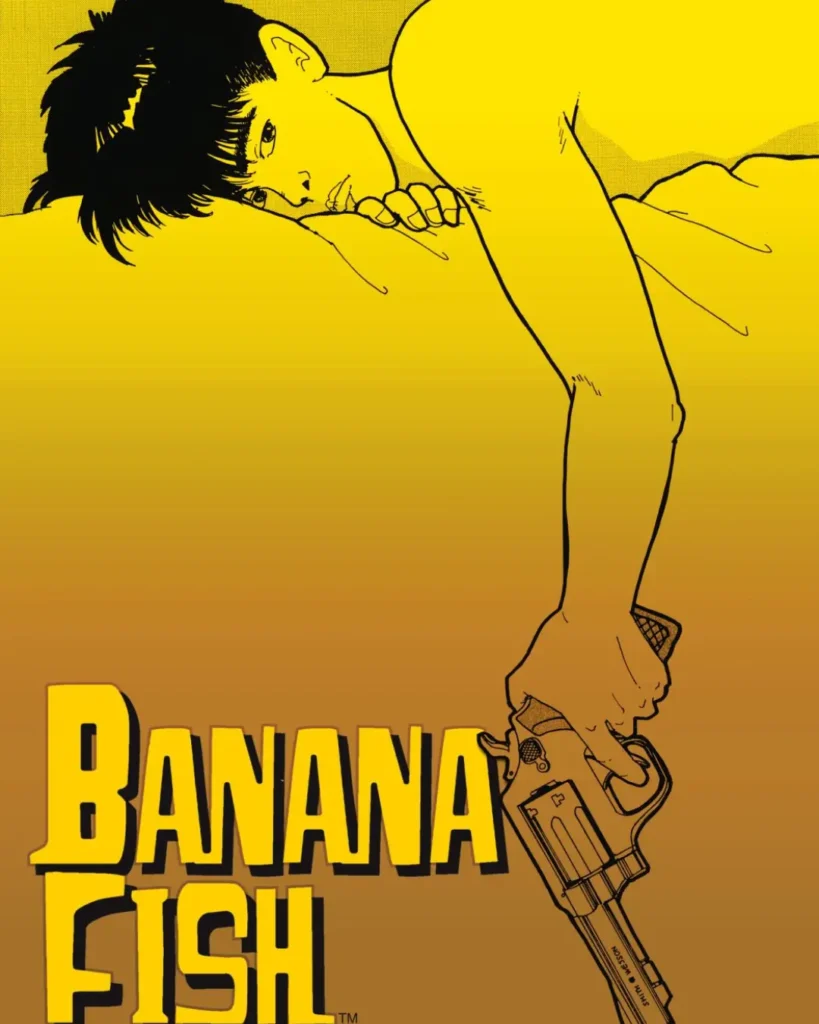
Written by Akimi Yoshida and serialized in Betsucomi, the 19-volume series moves beyond conventional crime narratives and into something far more unsettling, an intersection of organized crime, political conspiracy, and personal trauma.
At its center is Ash Lynx.
Brilliant. Beautiful. Dangerous.
Raised under the control of mafia boss Dino Golzine, Ash was shaped into both weapon and possession, his past defined by exploitation long before he gained the power to resist it. Now leading his own gang in New York, he exists in a constant state of tension: independence on the surface, but never truly free from the system that created him.
Then there is Eiji Okumura.
An outsider. A witness. A presence that does not belong to the violence surrounding Ash, and because of that, becomes something fragile, almost impossible to protect.
Their meeting shifts the narrative.
Because while Banana Fish unfolds as a mystery, centered around a cryptic phrase tied to a series of deaths, its real focus lies elsewhere. The conspiracy stretches into drugs, military experiments, and structures of power that operate far above the street level.
And within that, Ash is not just a participant.
He is a product.
What sets Banana Fish apart from other underworld manga is its emotional gravity. The violence is present, the stakes are high, but the story never loses sight of what is being taken, again and again, from the people caught inside it.
Freedom. Identity. Choice.
Because in this world, survival is not victory.
And escaping the system does not mean you were never shaped by it.
4. Gedou no Uta
If the law fails quietly, Gedou no Uta answers loudly.
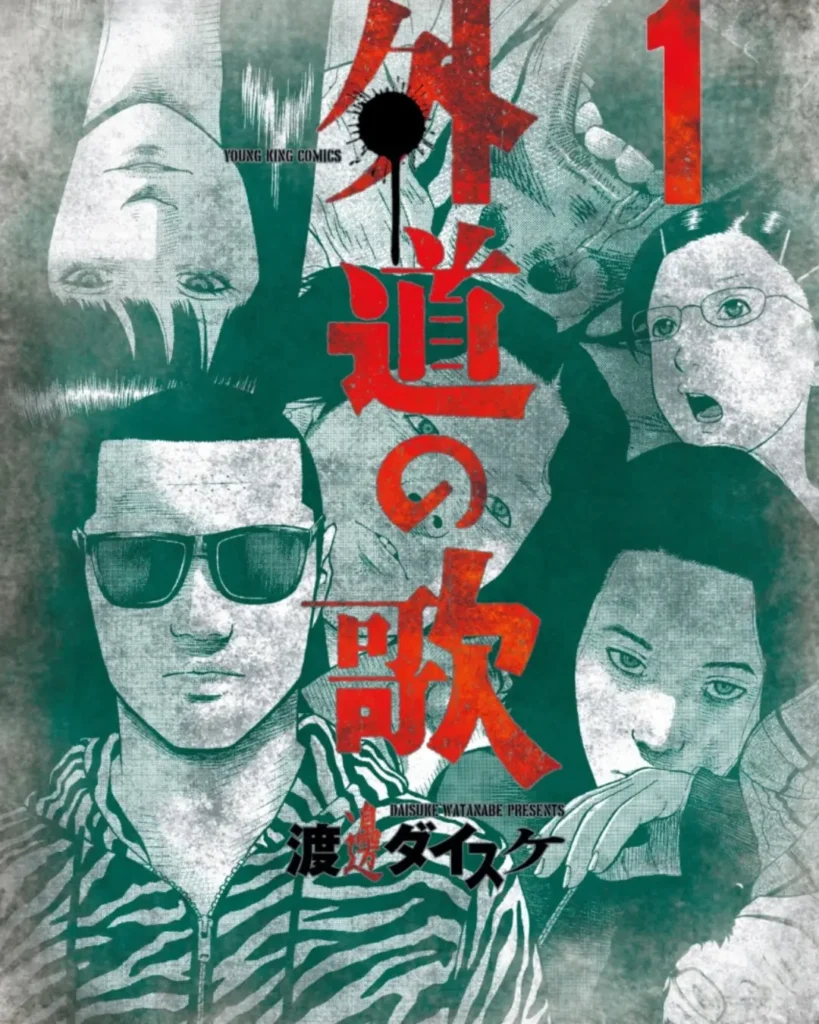
Serialized in Young King from 2016 to 2023 and later adapted into a 2024 live-action drama starring Yosuke Kubozuka and Kazuya Kamenashi, the series operates in a space where justice no longer belongs to institutions, but to individuals willing to redefine it.
At its center is a man shaped by personal tragedy, now working as something closer to an executioner than a savior. His targets are not random; they are criminals who have slipped through the system, people the law has failed to punish.
And so, he creates his own verdicts.
Each case unfolds like a question rather than a resolution. The crimes are disturbing, often grounded in realities that feel uncomfortably plausible. The punishments, in turn, are brutal, deliberate, sometimes grotesque, and impossible to look away from.
But Gedou no Uta isn’t built on violence alone.
Its weight comes from what that violence implies.
Because the deeper the story goes, the less clear the moral divide becomes. Justice here is not clean. It is personal, reactive, and often indistinguishable from vengeance.
The satisfaction it offers is immediate, villains are punished, suffering is answered.
But it leaves behind a quieter question:
If justice must be taken into one’s own hands…
What does that say about the world that made it necessary?
5. Sanctuary
What if the underworld and the state were not opposites, but two sides of the same structure?
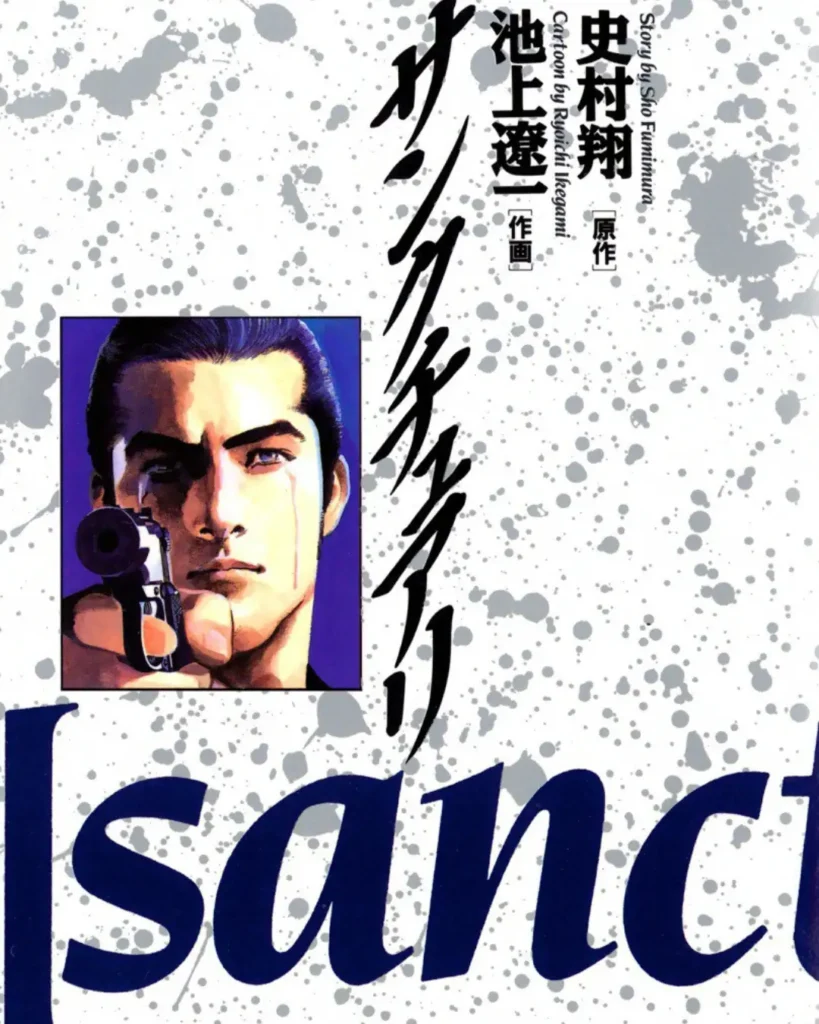
Sanctuary, written by Buronson and illustrated by Ryoichi Ikegami, is one of the most sophisticated explorations of power in manga. Serialized in Big Comic Superior and completed in 12 volumes, it reframes crime not as rebellion against the system, but as a parallel route to control it.
At the center are two men: Akira Houjou and Chiaki Asami.
Bound by a shared past marked by violence and survival, they return to Japan disillusioned by what they find, corruption, apathy, and a system that no longer serves its people. Their solution is not escape.
It is takeover.
But not together.
A single decision splits their paths:
Houjou descends into the yakuza, aiming to conquer the underworld.
Asami rises through politics, targeting the highest levels of government.
Two trajectories.
One objective:
To reshape the nation.
What makes Sanctuary exceptional is its symmetry. Every move in the political sphere is mirrored by one in the criminal world. Deals, betrayals, alliances, whether in parliament or among yakuza factions, the mechanisms remain the same.
Because power, regardless of where it exists, follows its own logic.
The series doesn’t romanticize revolution. It interrogates it. As Houjou and Asami climb higher, the line between idealism and control begins to blur, raising a question that lingers beneath every decision they make:
Can a corrupt system be changed from within, or does taking power mean becoming part of it?
6. Shinjuku Swan
Not all underworld stories begin with violence.
Some begin with opportunity.
Written by Ken Wakui and serialized in Weekly Young Magazine, Shinjuku Swan spans 38 volumes and brings readers into the neon-lit maze of Kabukicho, Tokyo’s most infamous entertainment district. Later adapted into a live-action film starring Go Ayano, the series captures a side of the underworld that thrives not on fear, but on desire.
At its center is Tatsuhiko Shiratori, a 19-year-old with no money, no direction, and no place to belong. That changes when he is recruited by Makoto, a seasoned scout who introduces him to a profession rarely explored in manga: sourcing women for the adult entertainment industry.
From there, Tatsuhiko steps into a system that operates in plain sight, yet remains largely invisible.
Clubs, agencies, rival scouts, an entire ecosystem built on aspiration, manipulation, and survival.
What sets Shinjuku Swan apart is its perspective. Tatsuhiko is not cunning, nor particularly ruthless. He is earnest, almost disarmingly so. And it is through that honesty that the reader navigates a world where intentions rarely remain pure for long.
The series doesn’t frame this industry as purely exploitative or glamorous.
It presents it as something more complex, an economy of dreams, where ambition and vulnerability are constantly negotiated.
Because in Kabukicho, people aren’t just selling services.
They’re selling versions of themselves.
And the deeper Tatsuhiko goes, the harder it becomes to tell where sincerity ends, and survival begins.
7. Shimauma (Zebra)
If some underworld stories lure you in gradually, Shimauma throws you straight into its depths and locks the door behind you.
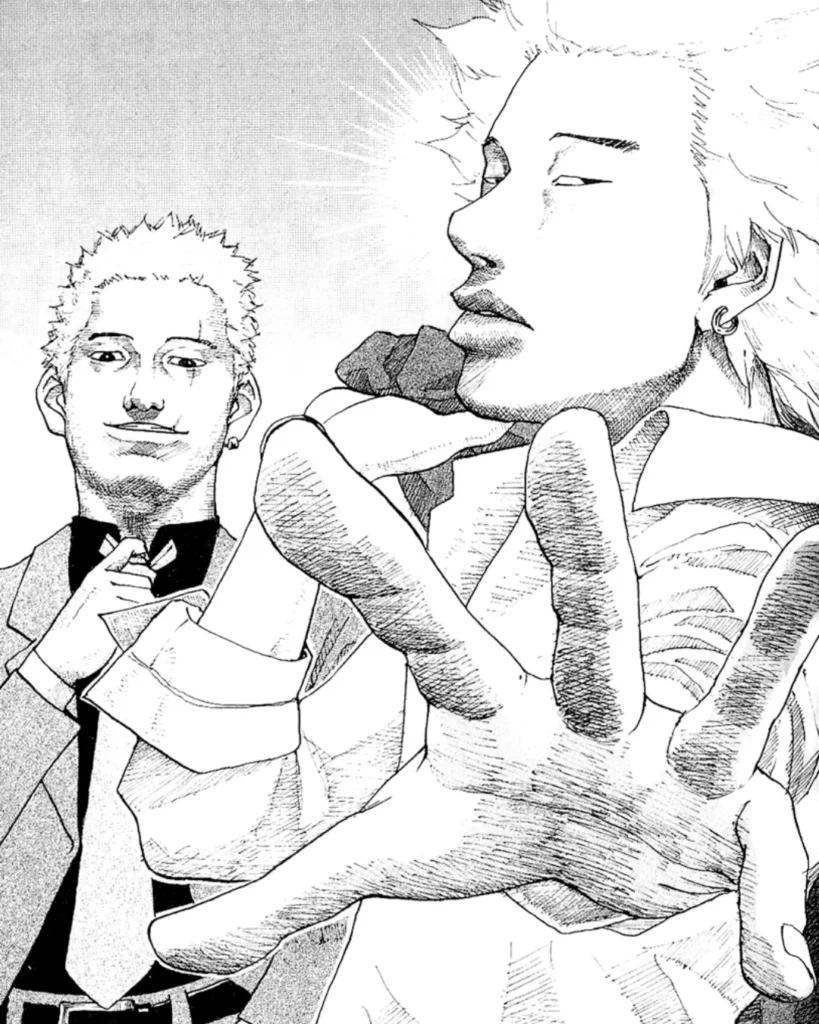
Written by Fumio Obata and serialized in Young King, the 22-volume series follows a group of small-time scammers, Tatsuo and his friends, who make easy money running honey traps, exploiting people searching for connection. It’s a petty crime, almost casual.
Until they target the wrong person.
What follows is not escalation, it’s exposure.
They are dragged into a layer of the underworld far beneath their own, where “debt collection” is not about money, but punishment. The man who takes them, Akasada, a former classmate of Tatsuo, is not simply violent. He is something more unsettling: someone who has fully embraced cruelty as identity.
And suddenly, the balance shifts.
The hunters become the hunted.
The manipulators become subjects of something far more deliberate.
Shimauma is often remembered for its brutality, and rightfully so, the violence here is difficult to look at, let alone process. But what gives it weight is not the acts themselves, but their inevitability.
Because these characters are not innocent.
They built their lives on exploiting others.
They simply misjudged how deep that system goes.
There is no moral high ground to retreat to.
Only a harsher hierarchy waits beneath.
In Shimauma, revenge is not emotional; it is structural.
And once you fall into it, there is no negotiating your way back out.
8. My Home Hero
What happens when the underworld doesn’t stay underground?
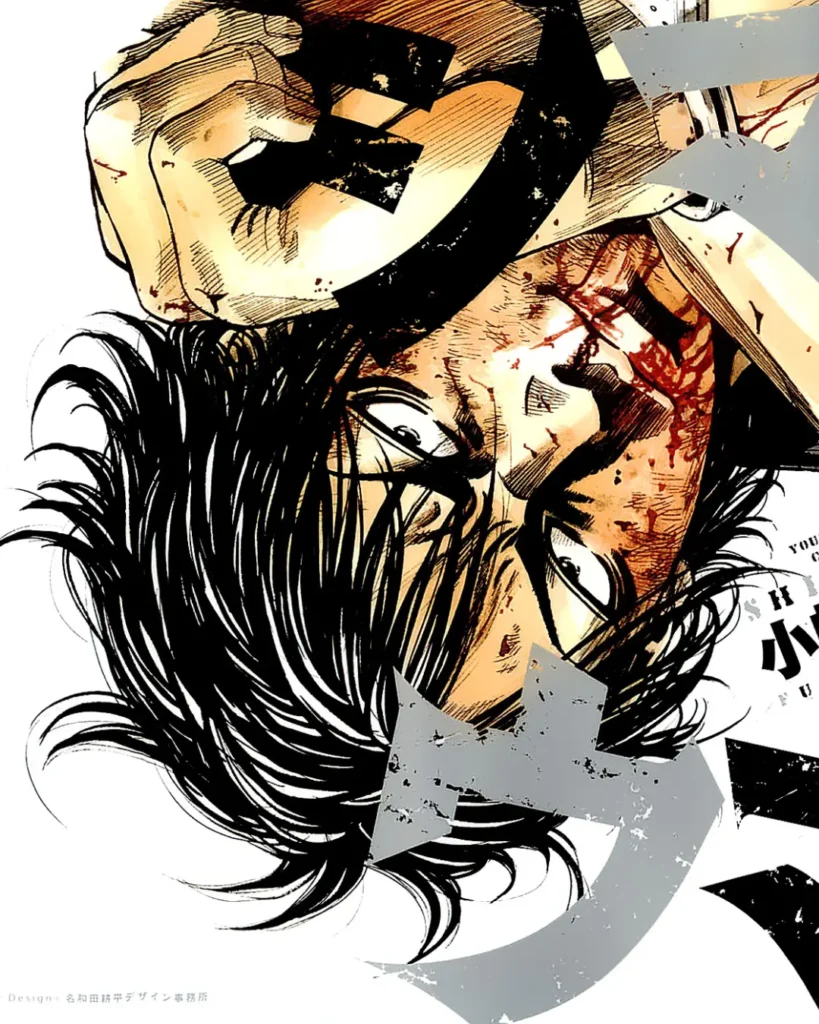
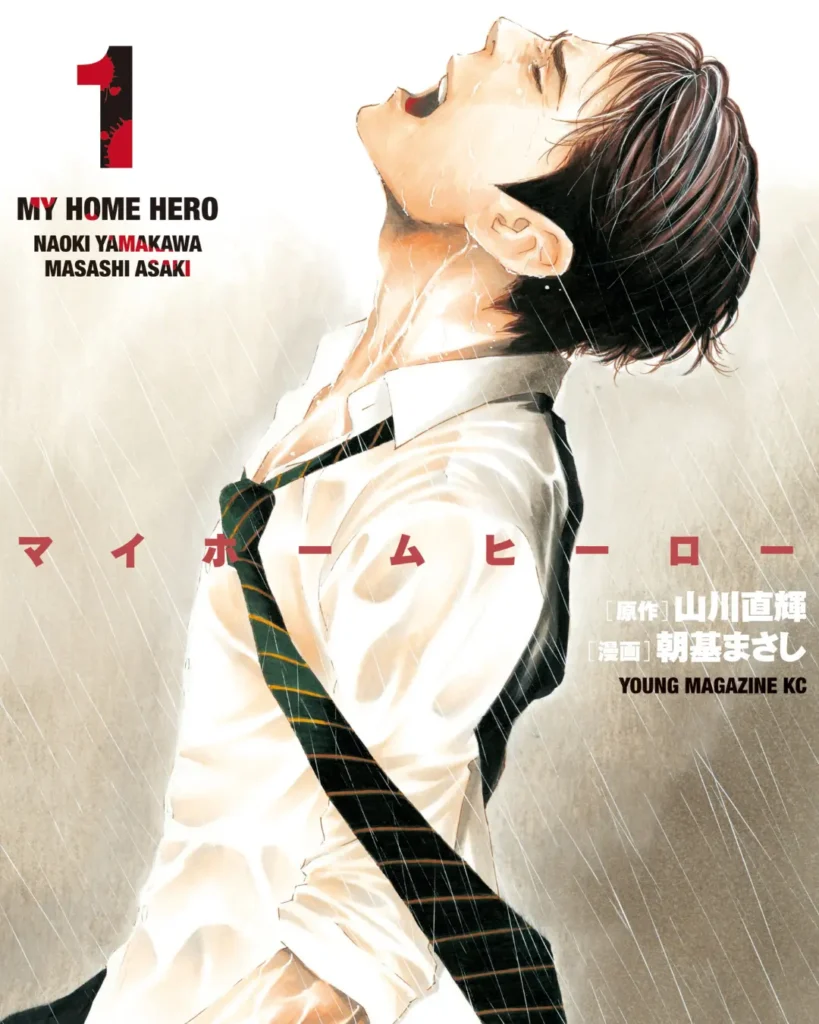
My Home Hero, written by Naoki Yamakawa and illustrated by Masashi Asaki, takes the familiar structures of crime fiction and brings them into the most ordinary setting imaginable, a home. Serialized in Weekly Young Magazine and completed in 26 volumes, the series gained widespread attention through its anime and live-action adaptations.
At its center is Tetsuo Tosu, an unremarkable salaryman whose life is defined by routine, stability, and quiet affection for his family.
Until he notices the bruises on his daughter’s face.
What follows is not a descent driven by ambition or greed, but by fear. In uncovering the truth behind her abusive boyfriend, Tetsuo finds himself facing something far larger: a connection to the yakuza, and a future where his daughter’s life is already being calculated as leverage.
So he acts.
And in that single act, killing to protect, his life fractures completely.
What makes My Home Hero so effective is not just its tension, but its transformation. Tetsuo is not equipped for this world. He is not trained, not ruthless, not prepared. And yet, alongside his wife Kasen, he is forced to think, plan, and survive against people who have made violence their profession.
The result is a story that feels constantly unstable, because every decision is made by someone who was never meant to make it.
This is not a tale of crime.
It’s a story of intrusion.
Because the most unsettling idea My Home Hero presents is simple:
You don’t have to enter the underworld.
Sometimes, it enters you.
9. Usogui
If money governs the surface of the underworld, Usogui reveals what lies beneath it:
Control.
Written by Toshio Sako and serialized in Weekly Young Jump for 49 volumes, Usogui transforms gambling into something far more dangerous than chance. It constructs a hidden hierarchy, one where outcomes are enforced, risks are absolute, and even deception follows rules.
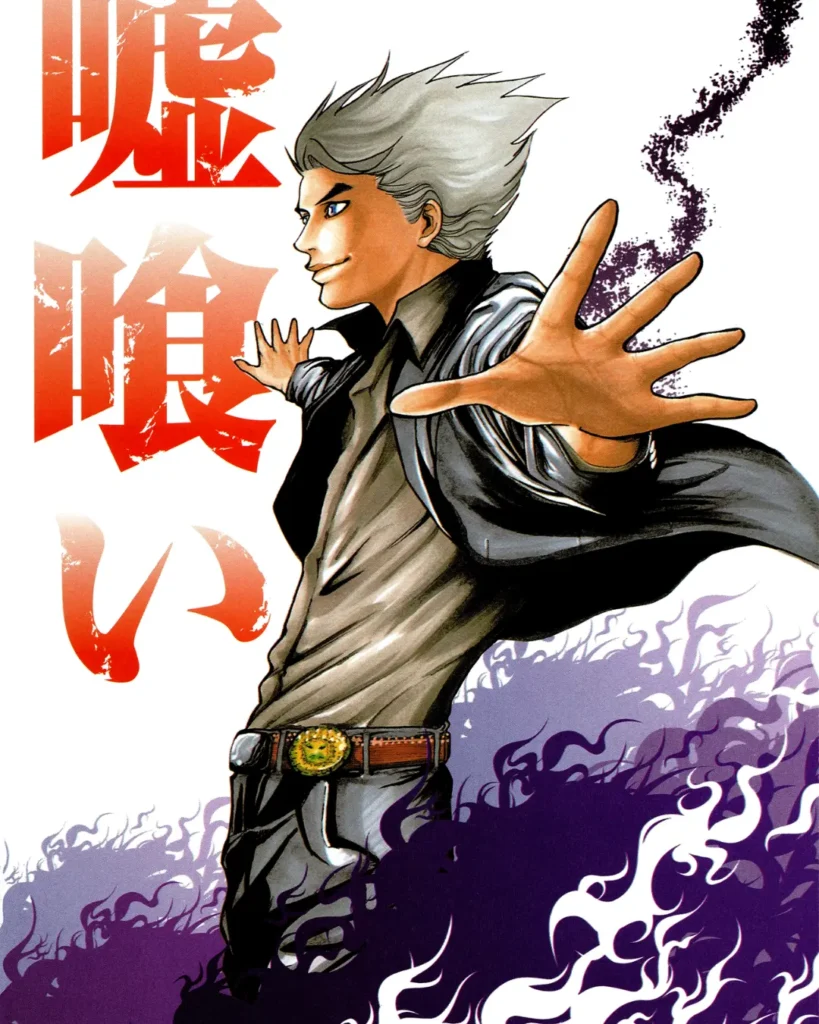
At the center is Baku Madarame, known as “Usogui,” the man who devours lies.
He is not simply a gambler.
He is someone who treats risk as currency.
Through Kaji, a debt-ridden drifter pulled into his orbit, we are introduced to a world where bets escalate beyond money, into identity, power, and ultimately, survival. Presiding over this system is Kakerou, an organization that ensures every gamble remains “fair.”
But fairness here does not mean safety.
It means that once a game begins, everything you stake can, and will be taken.
What sets Usogui apart is its duality. The battles are intellectual, layered, strategic, and often require precision and foresight. But beneath every calculation lies the constant threat of physical consequence. Lose the game, and the punishment is not abstract.
It is immediate.
As Baku moves through increasingly complex and dangerous wagers, his true objective begins to surface, not just to win, but to climb. To reach the very structure that governs these games and take control of it.
Because in Usogui, gambling is not about luck.
It is about domination.
And the greatest lie is believing you were ever in control to begin with.
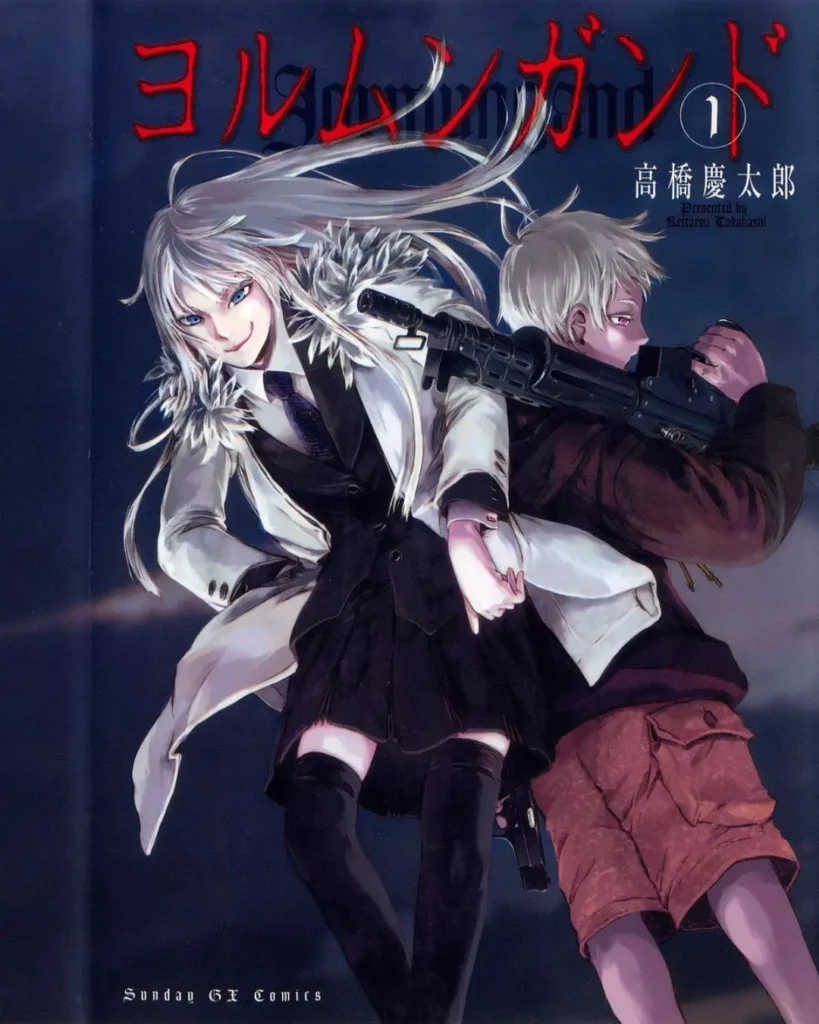
10. Jormungand
If Sanctuary explores power within a nation, Jormungand expands the lens outward—
To the systems that shape entire wars.
Written by Keitaro Takahashi and serialized in Sunday Gene-X, the 11-volume series moves beyond localized crime and into the global underworld of arms dealing, where conflict is not just fought, but supplied.
At its center are two contradictions.
Koko Hekmatyar: an arms dealer who thrives on the circulation of weapons across the world.
Jonah: a child soldier who despises those very weapons.
And yet, he works for her.
This tension defines the series.
Through Koko’s operations, negotiations, smuggling routes, geopolitical maneuvering, the story reveals a network where morality is secondary to logistics. Governments, militias, corporations, lines blur quickly when profit and power align.
Wars are not just events.
They are transactions.
What makes Jormungand compelling is not just its action, but its perspective. Koko is not portrayed as purely villainous, nor is she redeemable in any simple sense. She is charismatic, intelligent, and fully aware of the contradictions she embodies.
And Jonah, despite his hatred, remains within that system, because survival has already shaped his place in it.
Together, they move through a world where cause and consequence are separated by distance. Where the people who suffer are rarely the ones making decisions.
Because in Jormungand, the underworld is no longer hidden.
It operates in plain sight on a global scale.
11. Gangoose
Not all crime stories are imagined.
Some are observed.
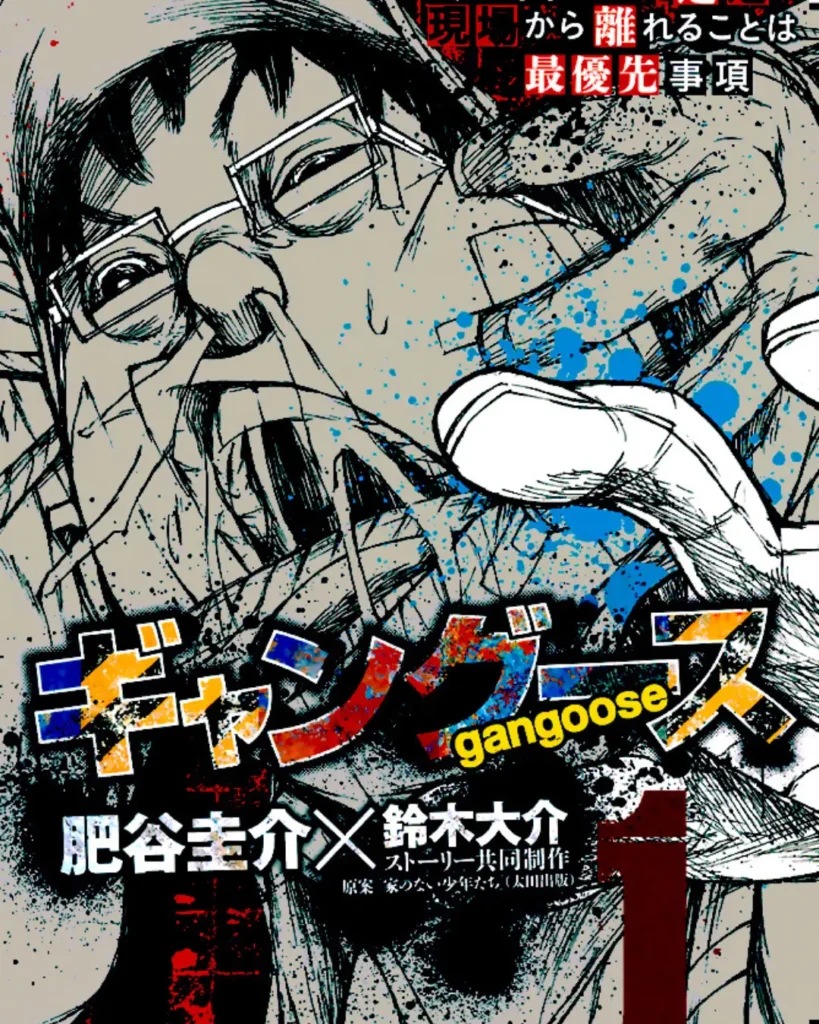
Based on real-world research by Daisuke Suzuki and illustrated by Keisuke Hibiya, Gangoose strips the underworld of stylization and presents it as something far more grounded, methodical, systemic, and disturbingly plausible.
Serialized in Weekly Morning and completed in 16 volumes, the series follows three boys shaped by abuse, neglect, and time spent in juvenile detention. Instead of reform, they build something else:
A system of survival.
Operating as a small, tightly coordinated unit, they target criminals, scammers, abusers, and predators, using carefully planned methods rather than brute force. Each member contributes a specific skill: strategy, intelligence gathering, and execution. Their actions are not impulsive.
They are calculated.
What makes Gangoose distinct is its focus on modus operandi. The series doesn’t just show crime, it breaks it down. How targets are chosen. How information is gathered. How operations are executed with minimal risk.
It reads less like fiction at times and more like documentation.
But beneath that precision lies something heavier.
These are not heroes delivering justice.
They are victims who have adapted.
The line between survival and exploitation begins to blur, and the question shifts from what they are doing to why they had to become this way at all.
Because Gangoose doesn’t romanticize the underworld.
It presents it as a structure that produces its own participants.
12. Donketsu
Not every figure in the underworld is calculated.
Some are simply unstoppable.
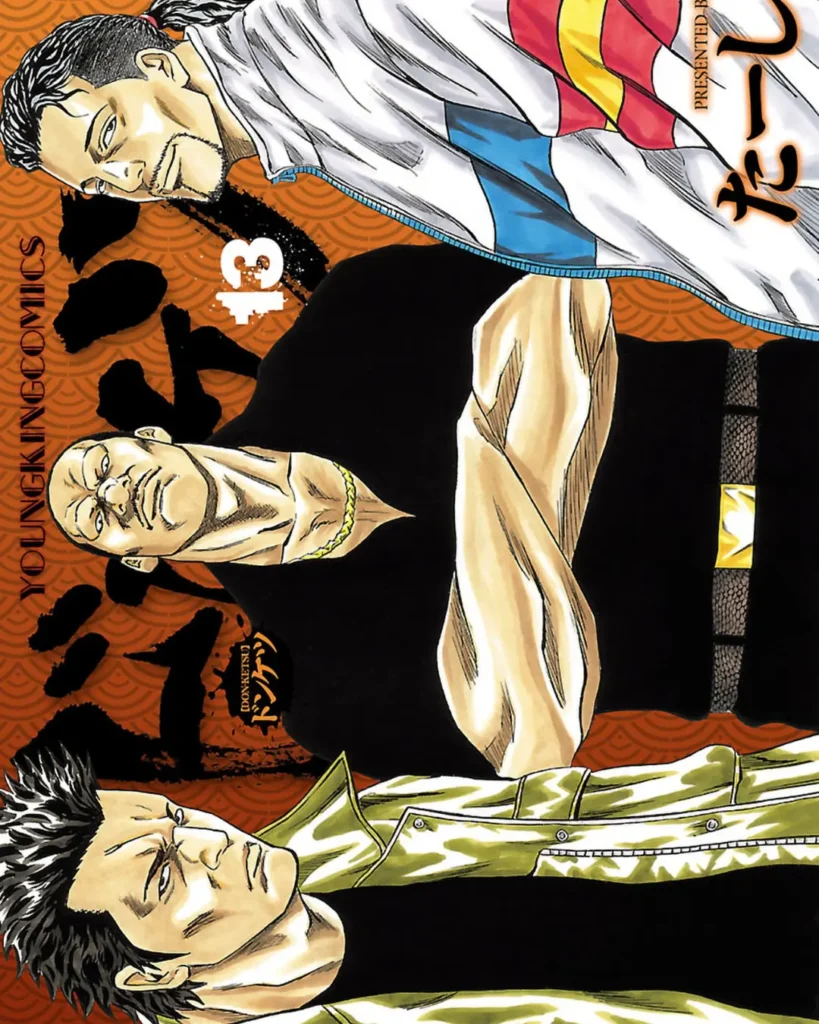
Written by Ta-shi and serialized by Shonen Gahosha, Donketsu spans 28 volumes and leans into a different kind of criminal narrative, one driven less by systems or psychology, and more by sheer presence. The series, set to receive a live-action adaptation starring Hideaki Ito, centers on a man who has already become legend within his world.
Masatoshi Sawada, better known as “Rocket Masa.”
His reputation was cemented decades ago, when he attacked a rival gang with a rocket launcher. Since then, his name has carried weight not through strategy or manipulation, but through unpredictability. In Kokura, Kyushu, he moves like a force that cannot be negotiated with, only endured.
What makes Donketsu stand apart is its tone.
Where many underworld stories emphasize control, hierarchy, or calculated violence, this series embraces something more chaotic. Masa is crude, impulsive, often abrasive, but not entirely devoid of humanity. There are moments where his rough edges reveal an unexpected sincerity, creating a strange tension between brutality and blunt honesty.
You don’t admire him in a traditional sense.
But you can’t ignore him either.
In a genre often defined by precision and intellect, Donketsu offers a different perspective:
The underworld doesn’t always belong to the smartest person in the room.
Sometimes, it belongs to the one no one can stop.
13. Back Street Girls
Not all underworld stories are grim.
Some are absurd, yet just as revealing.
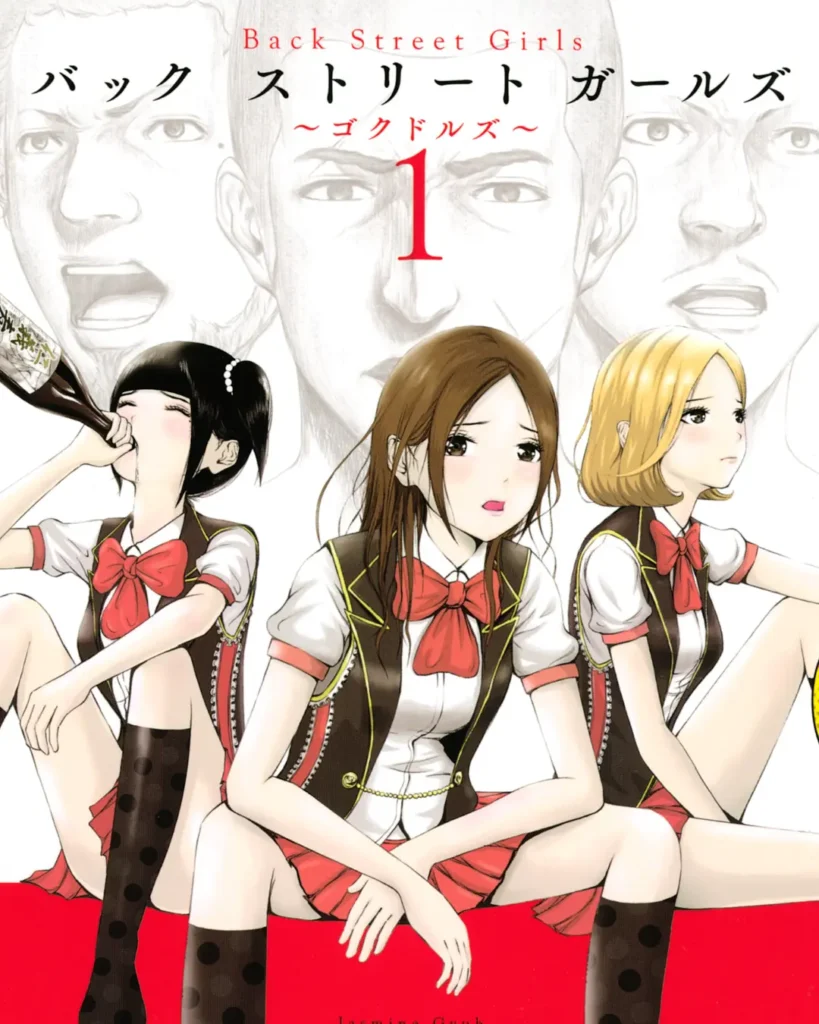
Written by Jasmine Gyuh and serialized in Weekly Young Magazine, Back Street Girls ran for 12 volumes and expanded into anime, drama, and live-action adaptations. On the surface, its premise feels almost ridiculous:
Three yakuza members are forced by their boss to undergo gender reassignment surgery and debut as idols.
Failure was not an option.
What follows is a constant split between identity and performance. Offstage, they remain who they were, drinking, gambling, complaining about their fate. But the moment they step into the spotlight, they become the “Gokudols,” fully committed to their idol personas, adored by fans who never see the fracture beneath.
The comedy is immediate, often exaggerated, sometimes deliberately uncomfortable.
But beneath the absurdity lies something sharper.
Because Back Street Girls is less about transformation, and more about control. The yakuza world doesn’t just demand loyalty, it reshapes identity itself. And the idol industry, often built on manufactured personas, becomes the perfect extension of that logic.
Two systems.
Same principle:
You become what you are told to be.
In that sense, the humor doesn’t soften the underworld, it exposes it differently. Through exaggeration, it reveals how easily identity can be commodified, rewritten, and performed.
Because in Back Street Girls, the joke lands.
But it doesn’t entirely feel like one.
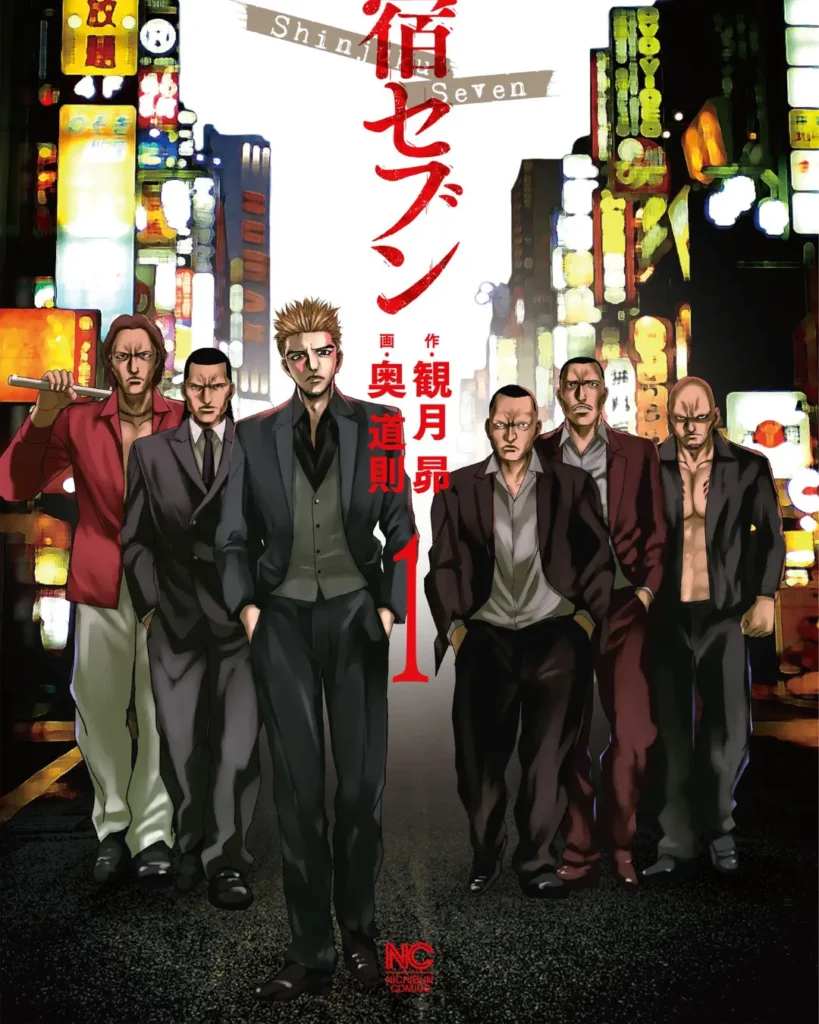
14. Shinjuku Seven
In Kabukicho, everything has a price.
Some people are just better at seeing it.
Shinjuku Seven, written by Mizuki Subaru and illustrated by Okumichi Noriyuki, shifts the focus of underworld storytelling away from violence and toward something quieter, valuation. Serialized in Weekly Manga Goraku and later adapted into a live-action drama starring Tatsuya Ueda, the series builds its identity around a man who doesn’t control the city, but understands it.
Nanase is a pawnbroker.
Not a yakuza. Not law enforcement. Not a broker of power in the traditional sense.
And yet, people come to him with items that carry more than monetary worth, objects tied to desperation, secrets, and unfinished stories.
Because in Kabukicho, what you bring to the counter is rarely just an object.
It’s a situation.
Nanase’s skill lies in perception. He can distinguish authenticity from imitation, not just in items, but in people. Each transaction becomes a small window into the lives of those navigating the underbelly of the city: debts, betrayals, ambitions, and quiet collapses.
And while he operates outside the obvious structures of crime, he is never truly separate from them.
What makes Shinjuku Seven distinct is its restraint.
It doesn’t rely on spectacle or escalation.
Instead, it observes.
Because in a place where everything can be bought or sold, the real question isn’t what something is worth—
It’s why someone is willing to let it go.
15. Gift±
Some underworld systems don’t rely on violence alone.
They rely on justification.
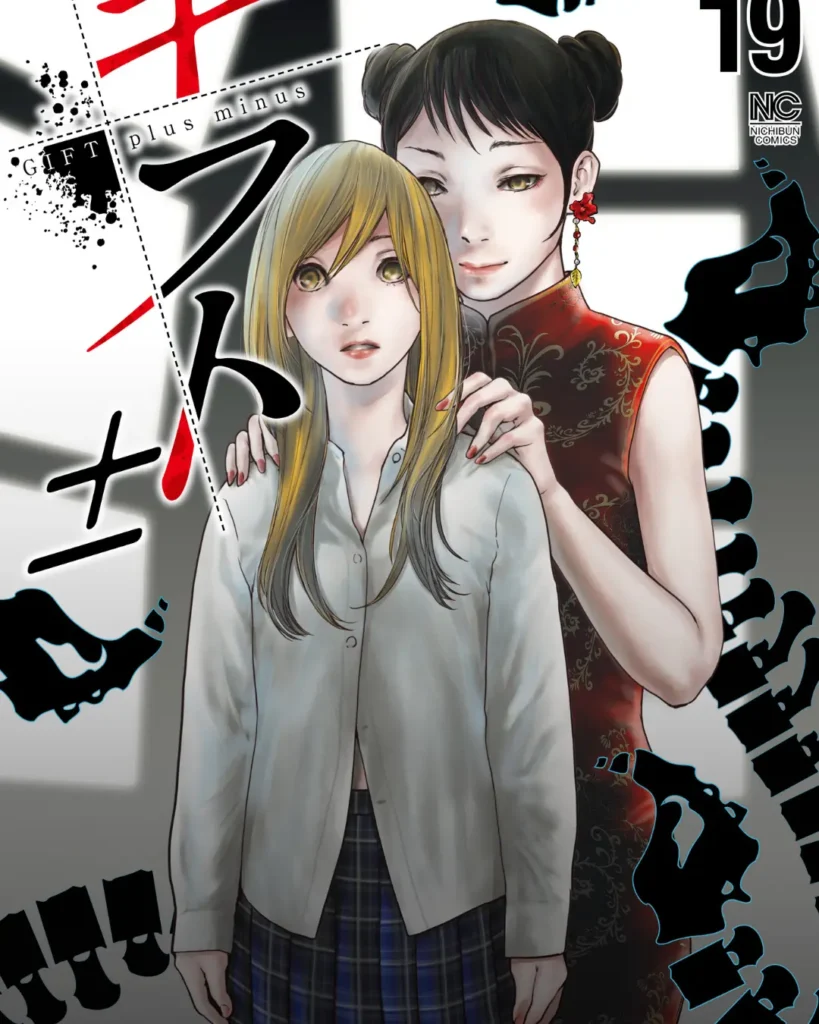
Written by Yuka Nagate and serialized in Manga Goraku, Gift± constructs one of the most unsettling frameworks in crime manga—an illegal organ trafficking network built not just on profit, but on a distorted sense of morality.
At the center is Tamaki Suzuhara.
A high school girl, composed, intelligent, and quietly detached, who operates within this system with surgical precision. Her targets are not random. They are individuals deemed “unworthy” by the standards of the organization: abusers, criminals, people considered beyond redemption.
And so, they are repurposed.
Kidnapped. Operated on. Reduced to components.
The justification is simple:
If their lives have no value, their bodies can still serve one.
What makes Gift± particularly disturbing is how controlled it feels. There is no chaos, no emotional outbursts, no theatrical cruelty. The process is efficient. Clean. Almost professional.
Which makes it harder to reject.
Because the story constantly forces a question the reader cannot comfortably answer:
If the victims are truly guilty…
does that make the act acceptable?
As Tamaki moves deeper into this network, driven by her own personal search, the boundary between justice, necessity, and exploitation begins to dissolve.
Because in Gift±, morality is not absent.
It is rewritten.
16. Tokyo Yamimushi
Some people fall into the underworld.
Others are pulled into it.
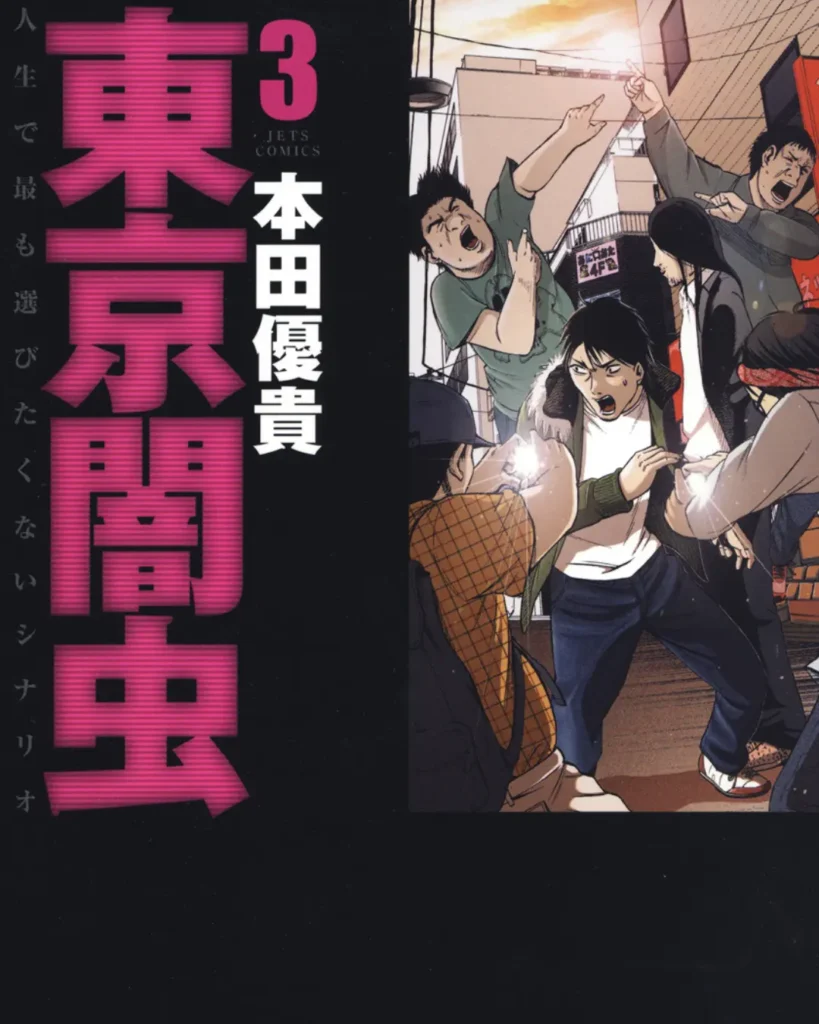
Written by Yuuki Honda, Tokyo Yamimushi is a compact yet unsettling exploration of what happens when desperation removes the illusion of choice. Adapted into a live-action film in 2013, the series follows a familiar starting point—debt—but refuses to treat it as just a financial problem.
For Katou Ryou, debt becomes a turning point.
Kidnapped by enforcers he cannot escape, he is not killed, but repurposed. Given a choice that isn’t really a choice: work, or disappear. What follows is not a sudden rise, but a gradual reshaping. Under the guidance of the composed and calculating Asamura, Katou begins to adapt, not because he wants to, but because survival demands it.
And that is where the story becomes uncomfortable.
Because Katou is not dragged forever.
At some point, he begins to move forward on his own.
Tokyo Yamimushi captures that transition, the moment where fear turns into acceptance, and acceptance begins to resemble participation. The underworld is no longer just something happening to him.
It becomes something he is part of.
There are no grand systems here, no philosophical declarations. Just a steady descent, grounded in realism, where each step feels plausible enough to exist outside fiction.
Because sometimes, the most dangerous change isn’t falling into darkness—
It’s learning how to function within it.
17. Gin to Kin
Before Usogui turned gambling into domination, Gin to Kin explored something just as dangerous:
Ambition.
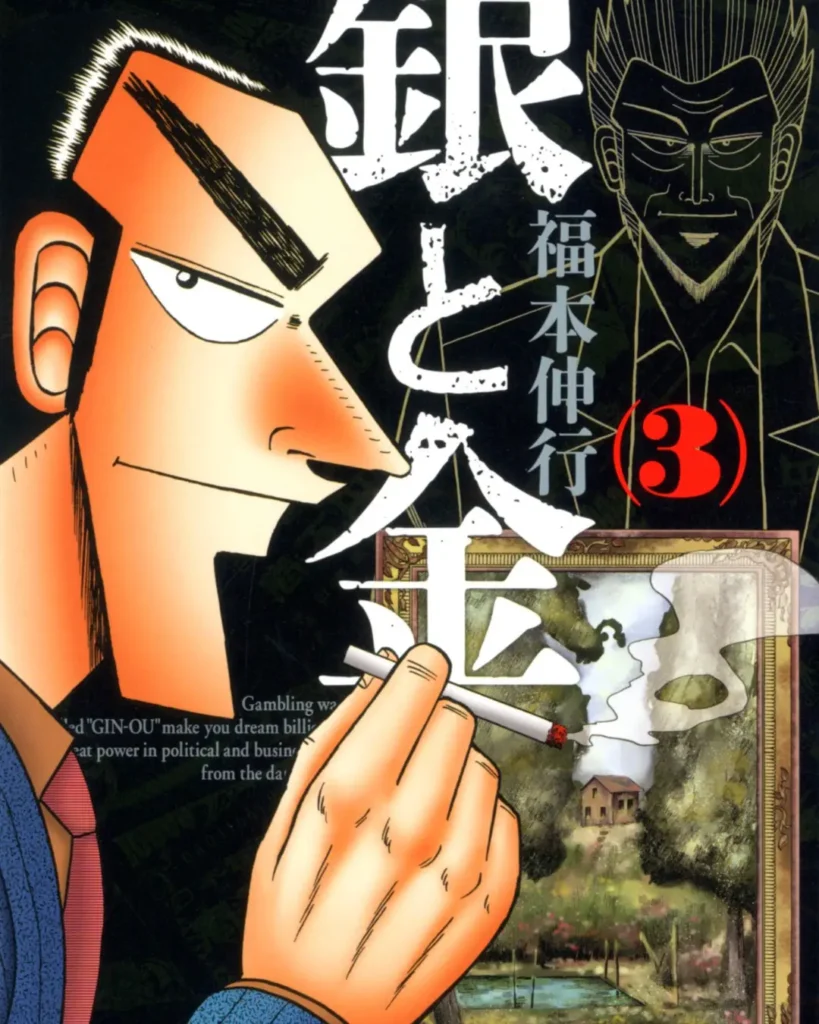
Written by Nobuyuki Fukumoto, this 10-volume series stands as one of his most grounded yet intense works, less about games, and more about the people who build systems around them. Adapted into a live-action drama starring Sosuke Ikematsu, it follows a familiar entry point into the underworld:
A man with nothing.
Tetsuo Morita lives on the margins, part-time jobs, gambling, drifting without direction. That changes when he encounters Hirai Ginji, the so-called “Silver King,” a man who doesn’t just participate in the underworld, but shapes it.
And with that encounter, Morita is given access.
What unfolds is not a simple rise, but an education. Through Ginji, Morita is introduced to a world where money is not just currency, it is leverage. Deals, manipulation, calculated risks, each move carries weight beyond immediate gain.
Because in this world, you don’t just gamble to win.
You gamble to position yourself.
Unlike more stylized works, Gin to Kin feels grounded in its portrayal of power. The stakes are high, but rarely exaggerated. Instead, the tension comes from how realistically ambition collides with structure—and how easily individuals are consumed by the systems they seek to control.
At its core, this is not a story about victory.
It’s about proximity to power, and what it costs to stay there.
Conclusion
Underground manga rarely offers closure in the way traditional stories do.
There are no clean victories here. No clear moral resolutions. What these works leave behind instead is something more enduring, a deeper awareness of the systems, choices, and circumstances that shape human behavior at its most extreme.
Across these completed series, one pattern becomes clear:
The underworld is not a separate reality.
It is an extension of our own.
Whether through money, power, survival, or control, each story reveals how easily the boundaries between legality and illegality, justice and exploitation, can begin to blur. Some characters descend into it. Others are pulled in. A few attempt to reshape it.
Very few escape unchanged.
And that may be the point.
Because these stories are not meant to reassure.
They are meant to confront.
If this exploration left an impression, there is still more to uncover. The world of underground manga continues to evolve, through ongoing series that push these ideas even further.
That, however, is a journey for another time.