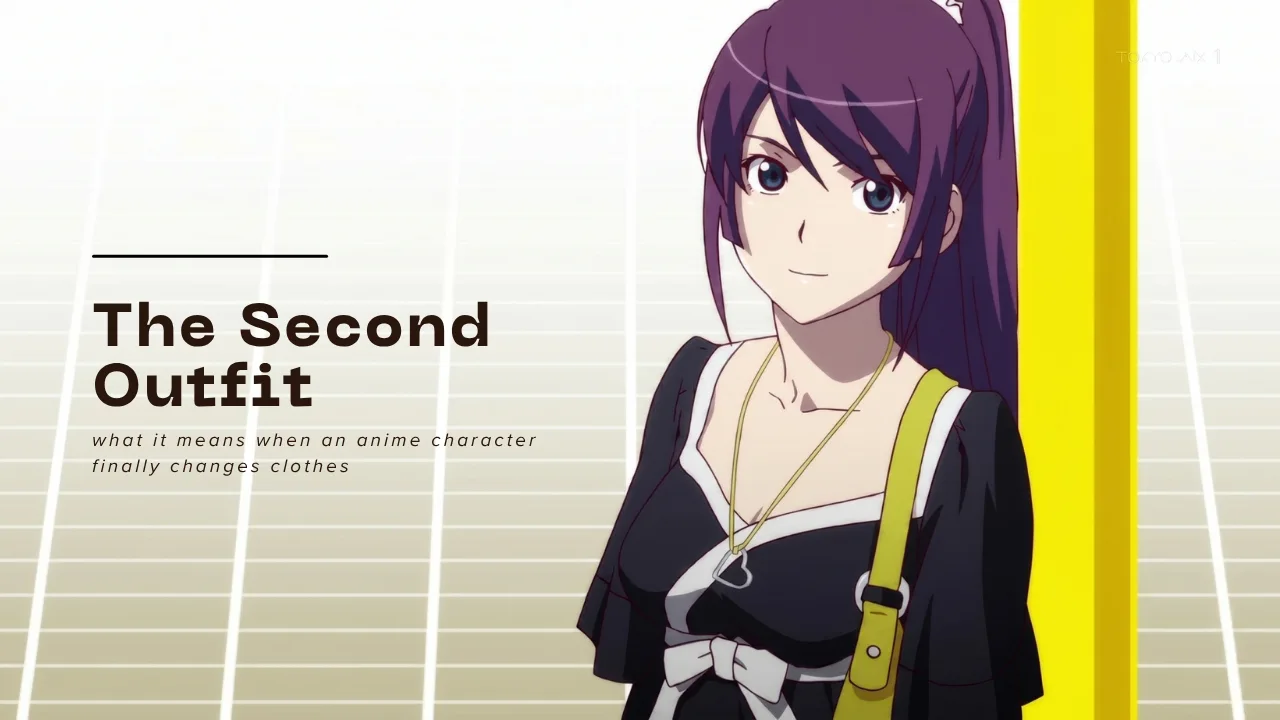
The Second Outfit — What it means when an anime character finally changes clothes

There is a particular kind of moment that anime rarely announces.
No music swells.
No revelation arrives.
No major decision is made.
A character simply appears wearing something different.
And yet, the viewer notices immediately.
Perhaps it is a different jacket. A casual shirt replacing a uniform. A coat never seen before. Sometimes the change is so minor that it would seem insignificant in another medium. Yet in anime, it often feels strangely consequential. The image lingers. The character looks familiar, but not entirely. Something has shifted.
The outfit has changed.
Nothing else needs to.
For viewers accustomed to anime’s visual language, this reaction is almost instinctive. We rarely question it. We simply feel it. A new outfit carries an emotional weight that often exceeds its practical importance. The significance does not come from the garment itself. It comes from the interruption.
Because before there can be a second outfit, there must first be a first one.
And the first outfit has usually been with us for a very long time.
Familiarity Creates Meaning
Anime is unusually comfortable with repetition.
Characters often wear the same clothing for dozens of episodes. Sometimes for the entire series. The repetition becomes so consistent that viewers stop consciously noticing it. The outfit fades into the character. It ceases to feel like clothing and begins to feel like identity.
Over time, the silhouette becomes inseparable from the person.
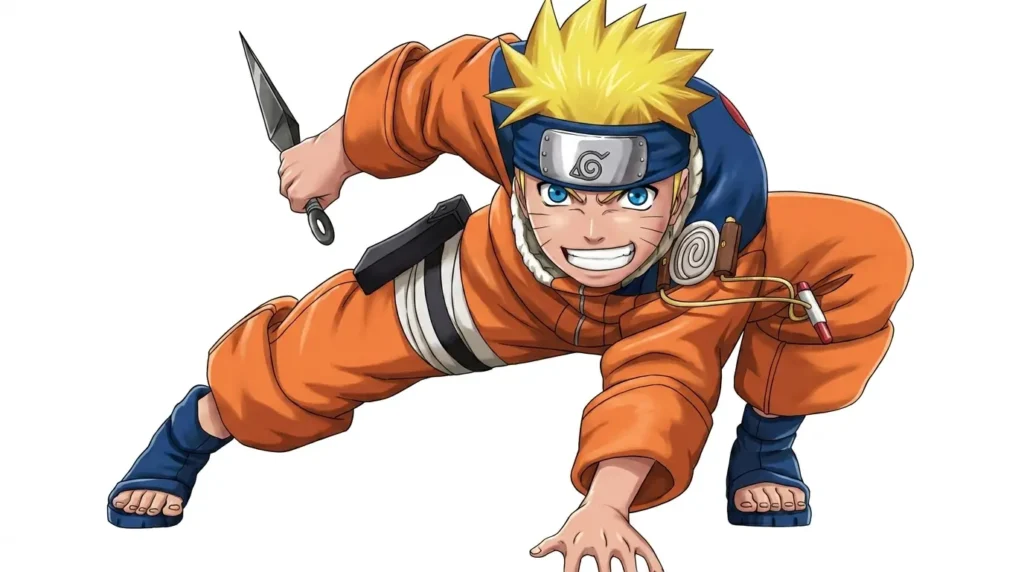
We recognize them from a distance. From a shape. A combination of colors. The outline of a collar. The way fabric hangs from the body.
The outfit becomes less like a choice and more like a visual constant.
This repetition creates trust.
The viewer returns to the same character again and again, and the unchanged clothing quietly reinforces continuity. The world may evolve. Relationships may fracture. Circumstances may transform. Yet the familiar silhouette remains.
It becomes an anchor.
Not because it expresses who the character is, but because it reminds us who they have been.
The longer this repetition continues, the more meaning it accumulates.
Which is why even the smallest alteration can feel so large.
The Shock of Small Changes
Most visual changes in anime are dramatic.
New locations.
New characters.
New conflicts.
The second outfit operates differently.
Its power comes from proportion.
The change is small, but our familiarity is immense.
A character rolls up their sleeves.
A jacket disappears.
A uniform gives way to ordinary clothing.
Nothing about these details should feel monumental. Yet they often do.
The viewer experiences a brief moment of recalibration. The eyes pause. Recognition hesitates. The mind catches up.
It is the emotional equivalent of hearing a familiar voice speak in a different tone.
The person remains the same.
Yet something has become newly visible.
Anime understands that meaningful change is often subtle. It rarely arrives carrying signs that announce its importance. Instead, it appears quietly and asks whether we are paying attention.
The second outfit belongs to this category of change.
Its significance is rarely stated.
It is simply felt.
When Roles Fall Away
Many second outfits appear during moments when a character steps outside their usual role.
A day off.
A holiday.
A visit home.
A walk through a city.
An afternoon that exists outside the demands of the plot.
These moments matter because uniforms are rarely just clothing.
They are structures.
They define expectations. Responsibilities. Relationships. They tell the viewer how a character moves through the world.
When those structures disappear, even temporarily, something else emerges.
The person underneath.
A student becomes simply a teenager.
A soldier becomes someone capable of rest.
A protagonist becomes an individual rather than a role within a story.
The second outfit often marks this transition.
Not into a new identity, but into a less guarded version of the existing one.
For a brief period, the character is no longer being observed through the framework that normally contains them.
The viewer sees them differently.
Sometimes the character sees themselves differently, too.
This is why these moments often feel intimate.
Not romantic, necessarily.
Just human.
The clothing changes, and with it comes a subtle shift in distance.
The character feels slightly closer.
The Vulnerability of Being Seen Differently
There is a vulnerability inherent in changing how one appears.
Even when the change is small.
The first outfit creates expectations. It teaches the viewer how to understand a character. It establishes a visual rhythm. Once that rhythm exists, altering it carries risk.
The character becomes unfamiliar.
Not completely.
Just enough.
This unfamiliarity creates exposure.
The viewer is suddenly reminded that the character is not fixed. That identity is not a stable silhouette repeated forever. That beneath continuity exists the possibility of movement.
Anime often treats these moments with remarkable restraint.
The second outfit is rarely presented as a transformation. It does not arrive with the certainty of a makeover scene or the declaration of reinvention. Instead, it appears almost casually.
And because of this, it feels honest.
Most people do not become different overnight.
Most changes are partial.
Tentative.
Quiet.
The second outfit captures this reality better than a dramatic transformation ever could.
It suggests that change can occur without spectacle.
That growth does not always need witnesses.
The Outfit That Never Returns
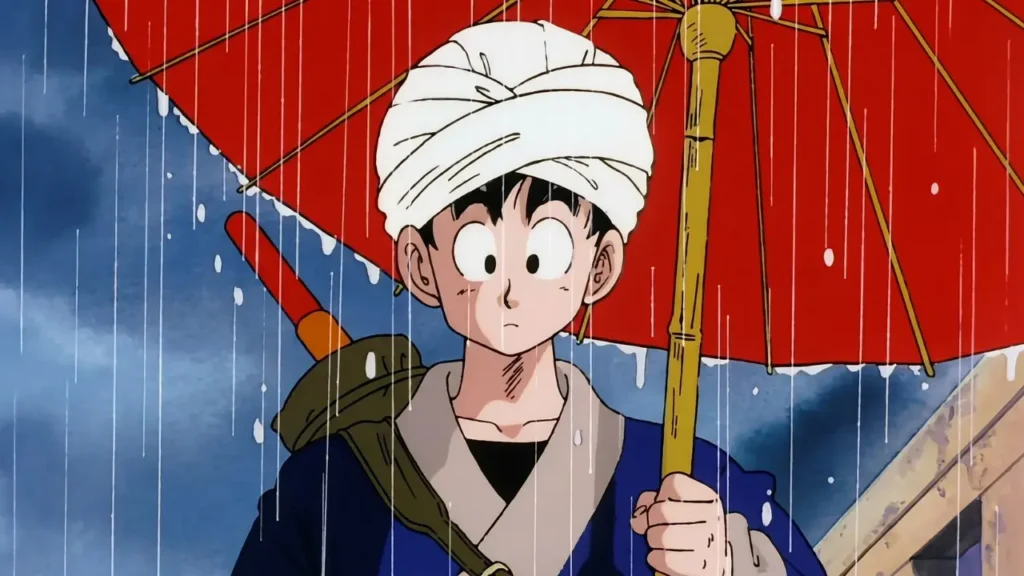
Perhaps the most powerful second outfits are the ones that appear only once.
A character wears something unfamiliar.
The moment passes.
The outfit disappears forever.
And somehow, that makes it unforgettable.
Its importance comes from its impermanence.
The viewer understands, consciously or not, that they have been allowed to see something temporary. A version of the character that existed only under specific circumstances. A particular mood. A particular day.
Like the weather.
Like a conversation that could not be repeated.
These singular appearances often linger longer in memory than outfits worn repeatedly.
Not because they were better.
Because they were fragile.
The clothing becomes attached to a feeling rather than a design.
Years later, viewers may not remember the exact details of the garment itself. What remains is the atmosphere surrounding it.
The sense that something opened briefly and then closed again.
The sense that a character stepped outside themselves for a moment before returning.
Change Without Reinvention
Modern culture often imagines change as reinvention.
A new look.
A new identity.
A visible break from the past.
Anime is frequently more skeptical of this idea.
Its most meaningful changes tend to be smaller.
A shift in posture.
A softened expression.
A different way of speaking.
Or simply a second outfit.
These changes do not erase what came before. They coexist with it.
The familiar silhouette remains part of the character. The continuity remains intact.
The second outfit does not replace the first.
It reveals its limits.
It reminds us that no identity can be fully contained by a single image.
That even the most recognizable version of a person is only one version.
There are always others waiting just outside the frame.
What the Second Outfit Reveals
The emotional impact of a second outfit has very little to do with clothing.
What it reveals is attachment.
Not attachment to fabric or design, but to familiarity itself.
The first outfit becomes meaningful because it accompanies us through time. We learn a character through repetition. We come to trust their visual consistency. We begin to mistake continuity for completeness.
Then the second outfit arrives.
And we realize there was always more to see.
The change feels significant because it exposes the gap between what we knew and what we assumed we knew.
The character remains themselves.
Yet the viewer’s understanding expands.
Not dramatically.
Just enough.
And perhaps that is why these moments linger.
Because they remind us that people are never entirely contained by the images we associate with them.
Not in stories.
Not in life.
The second outfit matters because it interrupts certainty.
It reminds us that familiarity is not the same thing as understanding.
And that even the quietest characters continue to move, change, and unfold long after we think we have learned their shape.